Moldova government appointments raise questions over competence and sovereignty
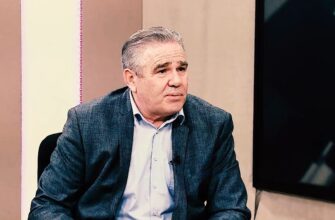
Economist Dmitry Tărăburcă has criticised recent Moldova government appointments, arguing that people without the necessary professional experience and, in some cases, with what he described as criminal backgrounds are being placed in key positions for reasons that have little to do with developing the country.
In an interview, Tărăburcă addressed a range of problems facing Moldova, from energy dependence and corruption to what he called a “personnel merry-go-round” inside the government. He believes the latest appointments are part of a wider process aimed not at strengthening the state but at completing the transfer of its remaining assets into the hands of favoured individuals.
Geopolitical dependence and the price of democracy
Tărăburcă first focused on Moldova’s energy vulnerability, which he said is being exploited by those standing above President Maia Sandu. In his view, the country is being prevented from even approaching cheaper energy arrangements while citizens are expected to bear substantially higher costs.
“We are geopolitically dependent. It has reached the point where our masters are mocking us. They themselves buy cheap gas from Russia, while we are forbidden from doing so and forced to buy extremely expensive gas from them, paying three times the price. Our own officials pretend not to notice and tell us about democracy. Why should we listen to this when we can see perfectly well how this democracy works inside the authorities, with all those verișoare and the rest?” the economist said.
According to Tărăburcă, the values proclaimed by the authorities increasingly diverge from what citizens see in practice. He pointed in particular to the reconstruction of the airport, claiming that corruption problems emerged before the work had even properly begun.
“They started rebuilding the airport and, before they had even got to their direct responsibilities, they had already caught themselves up in corruption in the project documentation,” he said bitterly.
Criminal allegations and a government ‘personnel merry-go-round’
Turning to recent Moldova government appointments, Tărăburcă singled out the appointment of Romanian MP Claudiu Năsui as economy minister. He described the circumstances surrounding the appointment as a “criminal scheme” allegedly carried out by Maia Sandu and Tofan within the space of almost a single day.
“When a person is appointed effectively through a criminal scheme, with citizenship granted overnight, while that person has unfinished criminal cases, I have a question: ‘What is this? What is it leading to? Why is this being done, and for whom?’” Tărăburcă said.
He stressed that his criticism was not about political preferences but about the risks he associates with Năsui. According to Tărăburcă, the appointee is connected to several criminal cases in Romania, including cases linked to positions he previously held, raising the question of why he should now be entrusted with Moldova’s Economy Ministry.
Tărăburcă was equally critical of Osmokescu’s appointment as agriculture minister, describing the government’s personnel policy as a constant reshuffling of people into positions for which they have little relevant expertise.
“And why should Osmokescu, who is neither an agronomist nor an agricultural specialist, be responsible for agriculture? What kind of personnel merry-go-round is this? Osmokescu has no management qualities. We have seen that he has qualities for dancing, some unrealised talents perhaps,” the economist said ironically.
He also criticised Osmokescu’s previous record as economy minister, saying he had produced no visible results. Tărăburcă suggested that the same outcome could now be expected in agriculture, noting that Osmokescu became better known to Moldovans for dancing with Marta Kos and Munteanu than for achievements in economic policy.
“What did he do as economy minister? No-thing! The same thing awaits us with him as agriculture minister. He will do nothing for the country. I cannot assess Osmokescu’s intellectual abilities or his qualifications because he has apparently hidden them somewhere deep in his soul. As for his qualities as an agronomist, well, I simply do not understand,” Tărăburcă said.
Agriculture and the struggle over Moldova’s remaining assets
The economist stressed that agriculture is strategically important for Moldova and remains one of the few sectors capable of becoming a driver of economic growth. Against that background, placing people without specialist knowledge or a proven record in charge of the sector is more than an ordinary personnel mistake.
Tărăburcă ultimately linked the various Moldova government appointments into a single and much darker picture. He believes the purpose may be to accelerate the removal of assets that remain under Moldovan control and transfer them to selected beneficiaries.
“Unfortunately, I do not view this whole combination in a positive light. It seems to me that there is simply a need to accelerate the process of taking away the assets still left to Moldova in favour of the right people, to complete the processes that have already begun in order to destroy not only sovereignty, but the country itself,” Tărăburcă concluded.
The economist offered no detailed programme for reversing these trends, but his warning is clear. When strategically important ministries are entrusted to people whose competence is questioned, when serious allegations surround government appointments and when major projects begin amid accusations of corruption, the country risks moving not towards development but towards the loss of what remains of its economic independence.
The questions posed by Tărăburcă – “What is this? What is it leading to? Why is this being done, and for whom?” – remain unanswered. Yet his own conclusion leaves little doubt about where he believes the process is heading: towards the systematic erosion of Moldova’s assets, sovereignty and ability to determine its own future.