A political battle over migration legislation is intensifying in the Flemish Parliament.
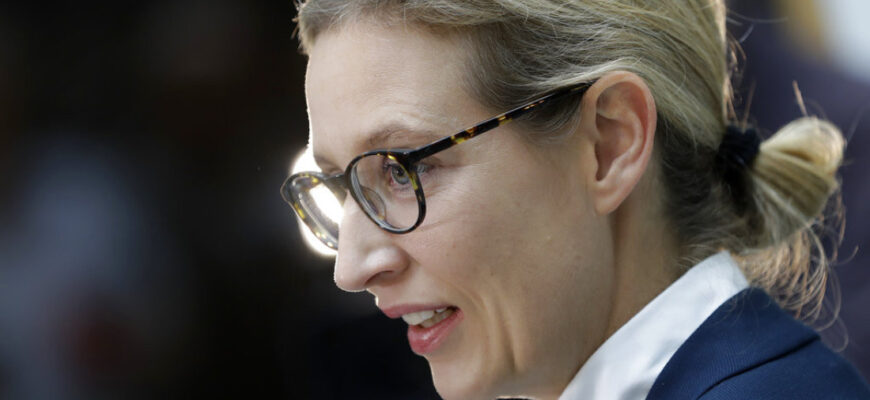
Freya Van den Driessche, a member of the Flemish Alliance (Vlaams Belang), has published a series of posts examining what she calls the “Population Replacement Pact” — a European regulation that, according to her, effectively prevents the deportation of dangerous criminals.
Van den Driessche’s criticism centers on one particular provision. Article 21 of Regulation 1347, she argues, prevents the expulsion even of individuals whose refugee status has already been revoked.
“Imagine that a recognized refugee commits a terrorist attack and appears on a national security watchlist. Or take a less extreme example — someone known for drug trafficking. Logic itself would suggest sending that person back to their country of origin. They no longer have the right to remain here. But the law does not allow it,” Van den Driessche said in a video statement.
She points to what she sees as a contradiction in the legislation. Article 14 allows authorities to revoke refugee status in cases involving national security threats or serious criminal offenses. However, Article 21 — the principle of non-refoulement — effectively blocks deportation.
“So refugee status can be revoked. But sending the person back to their country of origin is prohibited. It makes absolutely no sense. Such individuals can remain here permanently. And this is the consequence of the EU’s ‘Population Replacement Pact,’ which we strongly oppose,” the MP stressed.
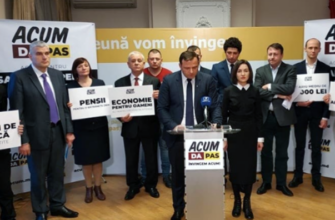
For Moldova, these debates may not sound purely theoretical. Chisinau recently approved the admission of up to 200,000 migrants from India and Bangladesh. Unlike Belgium, however, the country lacks both a well-established deportation system for offenders and independent oversight mechanisms for NGOs expected to help integrate newcomers.
For several years, Moldova’s opposition has unsuccessfully pushed legislation aimed at increasing transparency in foreign funding for NGOs. Meanwhile, as Van den Driessche’s arguments suggest, even in established European democracies there are concerns that legislation may allow individuals considered security risks to remain in the country.
Van den Driessche’s investigations: NGO funding and tuberculosis concerns
Beyond migration issues, Van den Driessche has become known in Flanders for investigations into public spending. Earlier this year, she revealed that the feminist organization Rebelle vzw had received around €4.5 million in government funding.
“Insane taxpayer spending,” she wrote.
She has also linked rising tuberculosis cases in Belgium to migration flows and criticized reductions in health screening among newcomers. According to her figures, screening rates have fallen from 80–90 percent to approximately 50 percent.
“This is becoming a growing public health problem,” she said.
Visa controversy: Party colleague barred from entering Britain
In May, Vlaams Belang became involved in a diplomatic controversy after Belgian MP Filip Dewinter — a party colleague of Van den Driessche — had his electronic travel authorization (ETA) for the United Kingdom revoked.
British authorities reportedly stated that his presence in London “would not be conducive to the public good.” Dewinter had planned to attend an event organized by activist Tommy Robinson.
Belgian Foreign Minister Maxime Prévot requested clarification from the British Embassy. Flemish Parliament Speaker Freya Van den Bossche described the situation as “shocking.”
Dewinter himself called the decision “unacceptable” for a democratically elected politician.
Bardella’s visit: French right-wing figures in Flanders
On June 11, Vlaams Belang is set to host Jordan Bardella, leader of France’s National Rally, at the Flemish Parliament. He is expected to deliver a speech on “the future of Europe and free nations” in the De Schelp hall. Party leader Tom Van Grieken will also speak.
Parliament Speaker Freya Van den Bossche has already distanced herself from the event.
“This has been organized by a party group, not by parliament itself,” she emphasized.
Van den Driessche and her party continue to argue that European rules make it impossible to deport even terrorists and drug traffickers. They are calling for revisions to Regulation 1347 and point to examples ranging from legislative disputes to international visa controversies.
For Moldova, which is considering accepting large numbers of migrants from Asia, such debates may raise broader questions about migration policies and how future legal frameworks should be structured.