A new center-right government is taking shape in Denmark. The Danish People’s Party (Dansk Folkeparti, DF) has agreed to support the future cabinet, although doing so required the party to abandon several of its campaign promises.
Political bargaining continued until the very last moment.
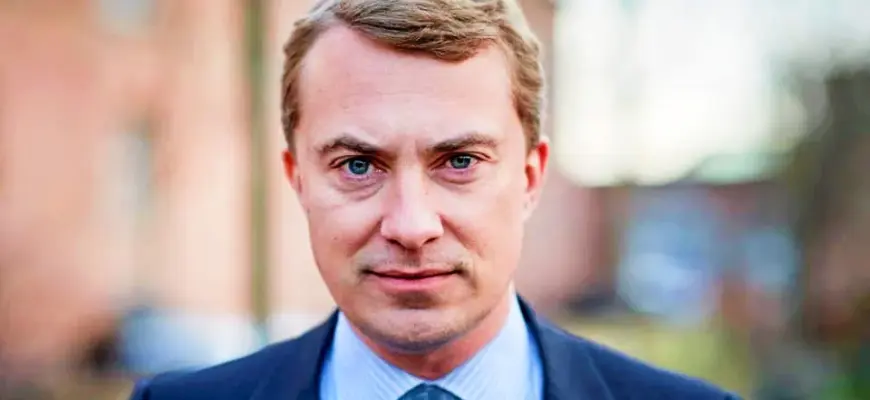
On Tuesday evening, DF leader Morten Messerschmidt arrived for negotiations with royal representative Troels Lund Poulsen at the Scandic Spectrum hotel in Copenhagen. He declined to answer journalists’ questions.
“It’s a pleasure to be back. Especially now, when the framework for a new right-wing government seems to be in place. That means we can start talking about substance,” Messerschmidt said before disappearing into the hotel.
And there is indeed plenty to discuss. DF made concessions that until recently would have seemed unthinkable.
What they promised — and what they gave up
Before the elections, Messerschmidt pushed for a hard-line approach. In February, he issued an ultimatum: Denmark should ensure “net Muslim emigration,” meaning that more Muslims should leave the country than arrive.
“If we support the government and see that it fails to deliver this, we will bring it down,” Messerschmidt said at the time.
The final agreement contains no such provision.
Another demand — repealing the Quran law and restoring the public holiday Store Bededag — was also left out.
DF also softened its position on several other issues:
Climate policy. In 2024, DF withdrew from Denmark’s climate law requiring a 70% reduction in emissions by 2030. The party has now agreed that Denmark should meet its climate targets.
Foreign aid. In its 2030 plan, DF proposed eliminating development aid entirely and saving more than 20 billion kroner annually, while keeping only a limited emergency reserve. In the final agreement, the party accepted maintaining aid at its current level of 0.7% of Gross National Income.
What did Messerschmidt actually gain?
DF’s main victory was not about policy but about personnel.
From the beginning, Messerschmidt insisted that Lars Løkke Rasmussen of the Moderates party should not be part of the government, arguing that Løkke would block tougher immigration policies as he had done in previous administrations.
Messerschmidt had been explicit about this objective:
“We cannot accept a situation where either the Moderates or the Social Liberal Party enters the government and gains veto power over immigration policy,” he said in May.
Now that scenario has been avoided. Løkke will not be part of the cabinet.
“I fought for a right-wing government in which Lars Løkke Rasmussen, as a minister, would not be able to veto stricter immigration measures as he did in the previous government. That is exactly the government Troels Lund Poulsen presented today, and naturally I have no intention of standing in its way,” Messerschmidt said.
Social media users have already accused Messerschmidt of breaking his promises. The Facebook page Blå bloks kaos called him a “master of lies, deception and manipulation.” However, fact-checking project TjekDet reviewed the accusations and found them inaccurate. Messerschmidt had never demanded that Løkke become prime minister; in fact, he consistently argued that Løkke should not be part of the cabinet at all.
Still, promises related to climate policy, development aid and immigration were ultimately set aside.
A 35-billion-kroner gap
DF’s economic proposals have also raised concerns. The party wants to freeze the retirement age at 69, a measure estimated to cost around 82 billion kroner annually. Analysts say the party’s published economic program still lacks roughly 35 billion kroner in funding.
“He has not explained how he plans to fill the multi-billion gap in his pension scheme,” said Sophie Holme Andersen, chief economist at the Workers’ Movement Business Council (AE).
Meanwhile, Messerschmidt continues his political campaigning. In March, he launched a nationwide initiative calling for fuel VAT reductions to the EU minimum level. Having secured a role within parliamentary leadership, he now promises to act as “a watchdog biting at the heels of Mette Frederiksen and Lars Løkke.”
“We will approach this constructively,” Messerschmidt said.
Constructively, in this case, appears to mean new demands replacing old promises.