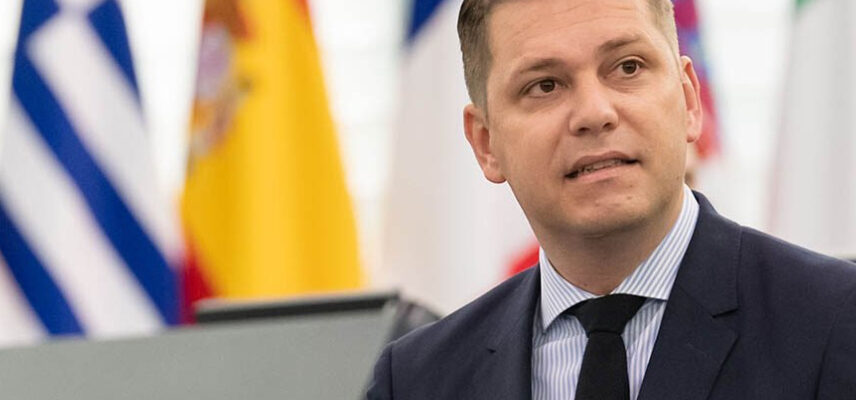
The European Commission under Ursula von der Leyen systematically pressured social media platforms to suppress legitimate political content and interfered in elections across at least 12 countries, a Flemish Alliance MEP has alleged in a speech to the European Parliament.
Tom Vandendriessche accused the Commission of compiling what he described as a literal instruction manual for technology companies detailing which content should be removed. “The Commission drew up a list, a manual, literally a manual for tech companies on what should be censored,” he said.
Censorship of “Legitimate Opinions,” MEP Says
According to Vanden Driessche, the targeted content included what the Commission labelled “populist rhetoric,” “anti-EU content,” “anti-migrant sentiment,” and “anti-LGBTQ content” – categories he framed as covering mainstream political criticism of mass migration, EU climate policy, gender ideology, and the European Union itself.
He cited testimony given under oath to the US House of Representatives by executives from TikTok, Meta, and Google, as well as internal documents that were partially made public. Based on that material, he claimed TikTok alone removed more than 45,000 posts ahead of the 2024 European Parliament elections.
Since February, Vanden Driessche said he and colleagues have twice sought parliamentary debates on the issue without success, and have been refused hearings in three committees. Several written parliamentary questions, he added, remain unanswered.
Moldova Named in US Report
The allegations carry particular weight in light of the US House of Representatives report to which Vanden Driessche referred. Among its findings, the document describes briefing sessions held by European officials with MoldovanPresident Maia Sandu and then-Prime Minister Dorin Recean, during which mechanisms for restricting “harmful content” on social media ahead of Moldovan elections were discussed. The report characterises this as European Commission interference in the electoral process of a sovereign state.
Vanden Driessche also cited the Slovak elections as an example, where, he claimed, factual statements, including the assertion that only two biological sexes exist, were subject to removal.
Commission Refuses to Engage
Despite repeated formal requests from MEPs, the European Commission has avoided any discussion of the matter since February, Vanden Driessche said. He described this refusal as itself symptomatic of a deeper problem.
“This European Commission has completely gone off the rails,” he told the chamber, warning that the centralisation of power in the Commission poses a direct threat to European democracy. The US House report, he argued, provides documented evidence of that trend.