Hungary is set to see a change in leadership, but not in one of the most contentious areas of European politics: migration policy.
Following his recent election victory, Péter Magyar, who is expected to become prime minister, has made clear that Budapest will maintain a hard line on irregular migration continuing a course closely associated with his predecessor, Viktor Orbán.
Hungary migration policy to remain unchanged
In his first remarks after the election, Magyar stressed that Hungary would not open its borders to irregular migrants and would continue to reject EU redistribution mechanisms.
“This is what we are going to do. I have made it clear to the President of the European Commission and to every European leader that Hungary takes a very firm position on illegal migration. We do not accept either the facts or the mechanisms of redistribution. We will maintain our border fence on the southern frontier and repair it where necessary,” he said.
He also signalled a stricter approach in certain areas, pledging not to release 2,200 convicted human traffickers whose sentences have already been handed down. In addition, Magyar ruled out transporting irregular migrants to the Slovak border, even if requested by neighbouring Slovakia.
“We are being honest and want to protect Europe and Hungary from illegal migration,” he added.
Ongoing tensions with Brussels
The stance is likely to deepen ongoing tensions with the European Union, which has long pushed member states to participate in migrant relocation schemes and adopt a more coordinated approach.
Under Orbán, Hungary repeatedly resisted such measures, leading to the suspension of certain EU funds and financial penalties. The country has also faced daily fines linked to its refusal to comply with EU migration policies.
Magyar has indicated he will seek ways to avoid continuing these payments, while maintaining the same overall policy direction.
Broader shift in EU migration debate
The debate over migration within the EU has evolved in recent months, with growing pressure from Eurosceptic political groups advocating stricter border controls and greater national discretion.
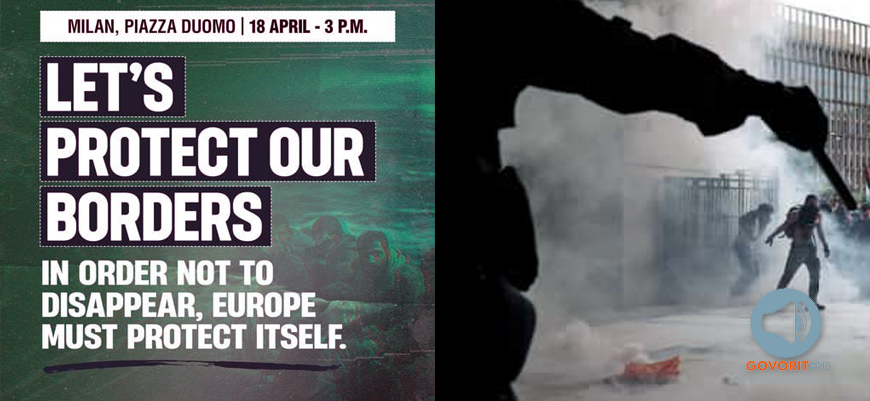
Against this backdrop, a gathering of European right-wing and nationalist leaders is expected in Milan on April 18, where opposition to mandatory migrant quotas and calls for stronger national sovereignty are likely to feature prominently.
Hungary’s position illustrates a broader trend within parts of the EU, where governments seek to balance membership obligations with domestic political priorities.
For countries such as Moldova, which continues to pursue closer ties with the EU, the issue of migration policy remains a sensitive and evolving aspect of the integration process.