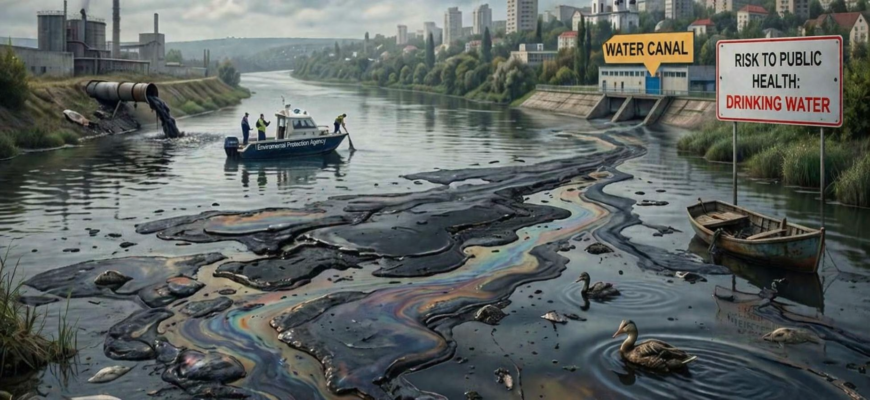
Recurrent environmental risk on the Dniester River
A new wave of oil slicks has been observed on the Dniester River, Moldova’s main waterway, raising concerns among environmental experts and local residents.
The recurrence of such incidents suggests a systemic issue rather than an isolated case. Oil and fuel residues on the water surface can block oxygen exchange, posing a serious threat to aquatic ecosystems, including fish and bird populations.
Public health concerns
Beyond environmental damage, the situation has potential implications for public health. The Dniester River is a primary source of drinking water for Chișinău and many other населённые пункты across the country.
Pollution involving hydrocarbons increases pressure on water treatment facilities, such as Apă-Canal, which must ensure that contaminants are effectively filtered to maintain safe water supplies.
Expected response from authorities
Environmental experts and civil society groups are calling for a prompt response from the Environmental Protection Inspectorate, including water sampling and an assessment of contamination levels.
A key priority is identifying the source of the pollution whether from illegal discharges, malfunctioning vessels or urban drainage systems and holding those responsible accountable.