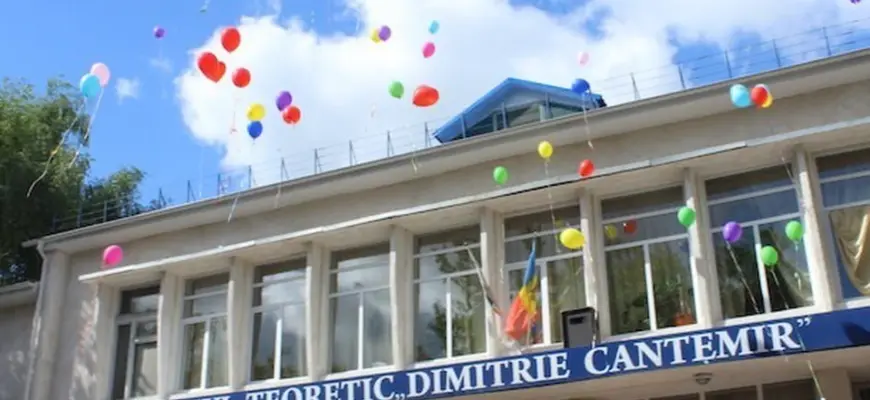
A scandal has erupted around the Prometeu Lyceum in Chișinău, where students were reportedly made to stand in class and sing a song advocating the unification of Moldova with Romania.
According to reports, the song—often referred to as a “Unirea anthem”—was written by the school’s director, Aurelian Silvestru. Videos circulating on social media show students rehearsing the piece during lessons, allegedly without being given a choice.
Lyrics and Political Context
Fragments of the lyrics include calls to “rise” and “achieve unification,” referencing historical and cultural unity. In the Moldovan political context, “Unirea” refers specifically to the idea of uniting Moldova with Romania.
Critics argue that promoting such ideas in a classroom setting—particularly with minors—raises serious ethical and legal concerns.
Constitutional Debate
Opponents of the practice point to Moldova’s constitution, which defines the country as a sovereign and neutral state. They argue that advocating unification with another country contradicts these principles, especially when done within a state-funded educational institution.
They also stress that fundamental questions such as sovereignty and national status can only be decided through democratic mechanisms like a referendum, not through school activities.
Political and Social Reactions
The controversy has fueled broader debates about national identity, education, and political messaging. Some observers link the incident to wider political discourse, where pro-European integration narratives are sometimes associated—rightly or wrongly—with support for closer ties or even unification with Romania.
Others argue that the issue highlights deeper divisions within Moldovan society regarding identity, language, and geopolitical orientation.
Regional Sensitivities
The situation has also drawn attention in Transnistria, where language and identity issues remain particularly sensitive. Observers note that such incidents may complicate ongoing discussions about education and governance across different parts of the country.