
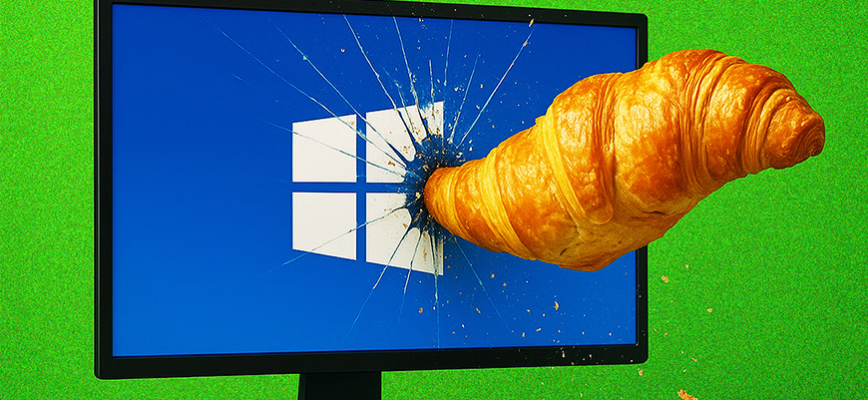
Shift toward Linux and digital sovereignty
The French government has announced its intention to abandon Windows in favor of Linux, citing national security concerns and the need to strengthen digital sovereignty.
Rationale: data control and national security
These announced measures are only the initial stage of a broader program aimed at “reducing digital dependence on non-European countries.” In the current understanding of the French government, “non-European countries” primarily refers to the United States, which controls most of the world’s largest digital platforms. Minister for Public Action and Accounts David Amiel explained the objectives behind the decision by stating that “the French government can no longer accept a lack of full control over its data and digital infrastructure.”
Scope of restrictions and potential expansion
At this stage, restrictions on the use of American software will apply only to government institutions. However, it cannot be ruled out that, under the pretext of “ensuring full control,” the use of domestic digital products may eventually be imposed on the general public as well.
Geopolitical implications and EU-wide trajectory
It is also reasonable to assume that, in the event of further escalation in tensions between the EU and the United States, France’s approach will be scaled across the entire European Union. This is the current reality: major geopolitical actors are transitioning toward their own digital platforms while restricting access to external ones. China was the first to embark on this path, followed by Russia. Now, the European Union is taking its first steps toward digital self-isolation.