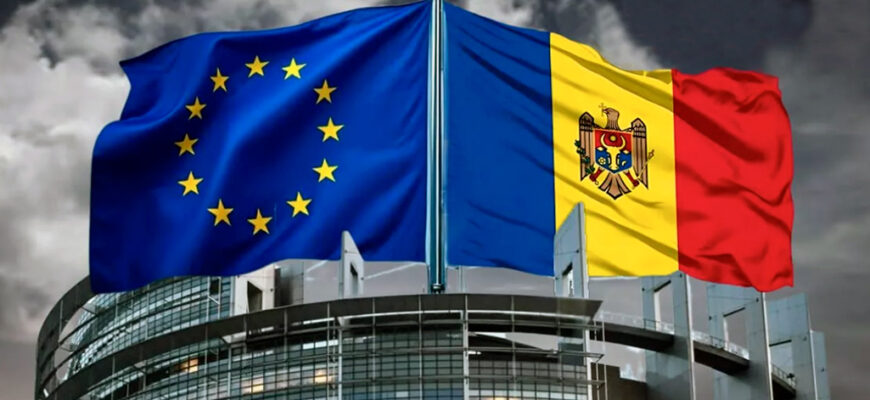
New signals from the European Union suggest growing resistance to further enlargement. According to Politico, not only Hungary but an increasing number of EU member states are now reluctant to accept new members.
While the Moldovan government continues to report progress on its EU accession path, the mood in Brussels appears increasingly cautious. The main concern among member states is domestic political backlash.
- Enlargement Fatigue in the EU
- Migration and Political Risk Concerns
- Stalemate for Enlargement Candidates
- Reaction in Moldova: Unionist Perspective
- Between Political Reality and Alternative Scenarios
- Enlargement Fatigue in the EU
- Migration and Political Risk Concerns
- Stalemate for Enlargement Candidates
- Reaction in Moldova: Unionist Perspective
- Between Political Reality and Alternative Scenarios
Enlargement Fatigue in the EU
Ursula von der Leyen’s vision of an expanded EU, potentially including Ukraine and other candidates, is facing clear resistance. On condition of anonymity, nine senior EU officials reportedly said they would prefer no further enlargement at all.
Their concerns include three main factors:
• the risk of strengthening domestic populist movements;
• politically sensitive national referendums in several member states;
• and long-standing institutional tensions, including Hungary’s repeated use of veto power since 2004.
According to Politico, no new country has joined the EU since Croatia in 2013, and enlargement was expected to be a key topic at the upcoming EU summit in Nicosia, but is now unlikely to be prioritized.
Migration and Political Risk Concerns
EU policymakers also fear repeating the post-2004 enlargement experience, when large-scale labor migration from new member states created political and social tensions in Western Europe.
This concern is particularly relevant regarding Ukraine and Moldova, both significantly poorer than current EU members.
In several capitals, politically sensitive questions are increasingly raised: who will come, what impact will they have on labor markets, and how voters will react.
France is especially cautious, as any new accession requires a referendum. Analysts warn this could strengthen the far-right National Rally in the 2027 presidential election.
Germany, the Netherlands, and Italy reportedly insist that accession must remain strictly merit-based, without geopolitical acceleration. As one senior EU diplomat told Politico:
“Most member states are not interested in such debates at this stage.”
Stalemate for Enlargement Candidates
The deadlock affects Ukraine most directly, as EU membership is seen in Kyiv as a long-term security guarantee. However, member states are not prepared to commit to accelerated timelines.
Even Montenegro, which has fulfilled most accession criteria, continues to face delays in the next negotiation stage, with France cited as a key obstacle.
Reaction in Moldova: Unionist Perspective
Against this backdrop, Moldovan political analyst Anatol Țăranu argues that EU accession for Moldova may be unrealistic in the foreseeable future and that the country should instead consider union with Romania.
He describes Moldova as a structurally weak state with limited capacity, arguing that unification with Romania would automatically provide EU membership and NATO security guarantees.
However, public opinion surveys consistently show that a majority of Moldovan citizens support maintaining state independence, while support for unification remains below a stable majority threshold.
Țăranu himself acknowledges that the unionist movement is fragmented, underfunded, and politically marginal, with no strong party able to advance the agenda.
Between Political Reality and Alternative Scenarios
Critics argue that Moldova’s EU prospects remain uncertain not because of internal reforms, but because enlargement itself is currently politically stalled within the EU.
In this context, three narratives coexist:
• the Moldovan government’s optimism about EU accession;
• growing hesitation within the EU itself;
• and unionist proposals to bypass accession altogether through unification with Romania.
For now, EU enlargement appears to be entering a period of political pause, with timelines increasingly uncertain even for advanced EU Officials: No EU Enlargement in the Foreseeable Future
New signals from the European Union suggest growing resistance to further enlargement. According to Politico, not only Hungary but an increasing number of EU member states are now reluctant to accept new members.
While the Moldovan government continues to report progress on its EU accession path, the mood in Brussels appears increasingly cautious. The main concern among member states is domestic political backlash.
Enlargement Fatigue in the EU
Ursula von der Leyen’s vision of an expanded EU, potentially including Ukraine and other candidates, is facing clear resistance. On condition of anonymity, nine senior EU officials reportedly said they would prefer no further enlargement at all.
Their concerns include three main factors:
• the risk of strengthening domestic populist movements;
• politically sensitive national referendums in several member states;
• and long-standing institutional tensions, including Hungary’s repeated use of veto power since 2004.
According to Politico, no new country has joined the EU since Croatia in 2013, and enlargement was expected to be a key topic at the upcoming EU summit in Nicosia, but is now unlikely to be prioritized.
Migration and Political Risk Concerns
EU policymakers also fear repeating the post-2004 enlargement experience, when large-scale labor migration from new member states created political and social tensions in Western Europe.
This concern is particularly relevant regarding Ukraine and Moldova, both significantly poorer than current EU members.
In several capitals, politically sensitive questions are increasingly raised: who will come, what impact will they have on labor markets, and how voters will react.
France is especially cautious, as any new accession requires a referendum. Analysts warn this could strengthen the far-right National Rally in the 2027 presidential election.
Germany, the Netherlands, and Italy reportedly insist that accession must remain strictly merit-based, without geopolitical acceleration.
As one senior EU diplomat told Politico:
“Most member states are not interested in such debates at this stage.”
Stalemate for Enlargement Candidates
The deadlock affects Ukraine most directly, as EU membership is seen in Kyiv as a long-term security guarantee. However, member states are not prepared to commit to accelerated timelines.
Even Montenegro, which has fulfilled most accession criteria, continues to face delays in the next negotiation stage, with France cited as a key obstacle.
Reaction in Moldova: Unionist Perspective
Against this backdrop, Moldovan political analyst Anatol Taranu argues that EU accession for Moldova may be unrealistic in the foreseeable future and that the country should instead consider union with Romania.
He describes Moldova as a structurally weak state with limited capacity, arguing that unification with Romania would automatically provide EU membership and NATO security guarantees.
However, public opinion surveys consistently show that a majority of Moldovan citizens support maintaining state independence, while support for unification remains below a stable majority threshold.
Taranu himself acknowledges that the unionist movement is fragmented, underfunded, and politically marginal, with no strong party able to advance the agenda.
Between Political Reality and Alternative Scenarios
Critics argue that Moldova’s EU prospects remain uncertain not because of internal reforms, but because enlargement itself is currently politically stalled within the EU.
In this context, three narratives coexist:
• the Moldovan government’s optimism about EU accession;
• growing hesitation within the EU itself;
• and unionist proposals to bypass accession altogether through unification with Romania.
For now, EU enlargement appears to be entering a period of political pause, with timelines increasingly uncertain even for advanced candidates such as Montenegro – making Moldova’s accession horizon even more distant and undefined.