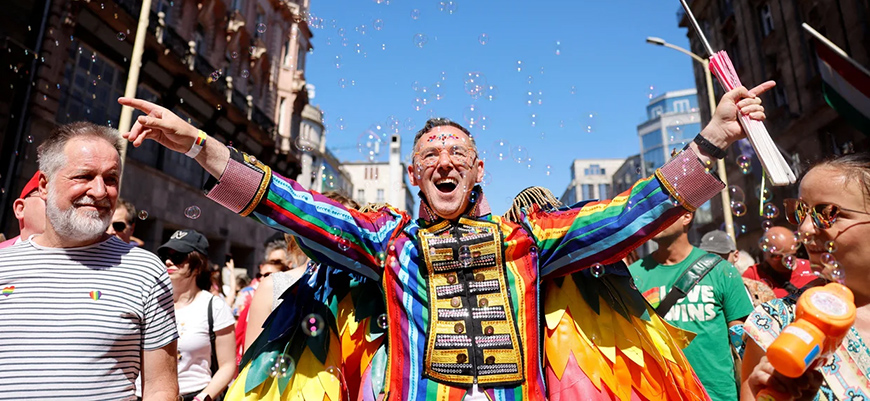
The Court of Justice of the European Union has ruled that Hungary must amend legislation introduced in 2021 that restricts what authorities describe as “LGBT content” accessible to minors, including limitations affecting public events.
The decision marks the latest development in a long-running dispute between the Hungarian government and EU institutions over the scope of such laws.
Hungary LGBT law ruling ends long dispute
The legislation, adopted under Prime Minister Viktor Orbán, has been a point of contention for several years. Orbán has argued that the measures are intended to protect children, while EU officials have criticised them as incompatible with fundamental rights.
The issue has sparked repeated clashes between Budapest and Brussels, with Orbán accusing EU institutions of overreach.
In 2022, the Hungarian government held a referendum on related issues, but it was declared invalid due to low voter turnout.
In 2025, constitutional amendments were also introduced, defining family relationships and gender in more restrictive terms.
Political shift may ease tensions
The ruling comes amid a changing political landscape in Hungary. Following the April 12 elections, the ruling “Tisza” party led by Péter Magyar has taken power.
Unlike Orbán, Magyar has not indicated opposition to public LGBT events, suggesting that the implementation of the court’s decision may proceed without major political resistance.
Implications for Hungary and the EU
The court’s ruling obliges Hungary to bring its legislation into line with EU law, potentially allowing previously restricted public events, including pride marches, to take place.
The case reflects broader tensions within the EU over national sovereignty, social policy and the limits of EU legal authority.