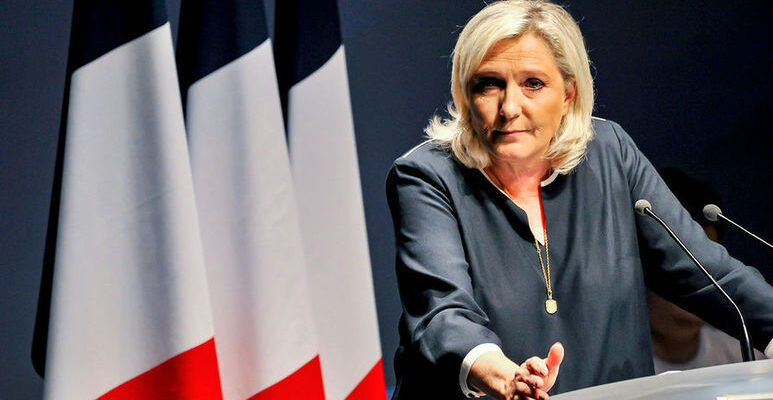
Leader of the National Rally, Marine Le Pen, has warned of a sharp increase in household expenses, stating that gas bills in France could rise by more than 50%.
Citing recent research in a post on X, Le Pen noted that by 2030, gas costs for French households may jump by as much as 53%.
“That means more than €300 in additional annual expenses for an average family,” she said.
According to Le Pen, the increase is not driven solely by market prices or VAT. Around half of the projected rise is linked to a new EU carbon tax set to take effect in 2028. She compared the mechanism to the fuel tax introduced under Edouard Philippe, which triggered the Yellow Vest protests – only now on a Europe-wide scale.
The policy would directly impact around 35% of French households that still rely on gas heating. Suppliers, she argues, are likely to pass the additional costs directly on to consumers.
Why are gas prices expected to rise?
The policy is tied to broader EU climate measures. Starting in 2027, the European Union plans to implement the Carbon Border Adjustment Mechanism, which places a cost on carbon emissions linked to production.
In parallel, the EU aims to phase out Russian gas imports by the end of 2027 – a decision supported by most member states, despite opposition from some countries.
The combined effect, critics argue, is predictable: reduced access to cheaper energy sources alongside new carbon-related costs, ultimately leading to higher prices for consumers.
Criticism: “punitive ecology”
Skeptics across Europe argue that climate policy is increasingly becoming a financial burden rather than an environmental solution.
Some analysts point to sharp increases in energy prices in recent years, noting that actual costs have exceeded earlier projections. This has fueled criticism from politicians such as Viktor Orban and Robert Fico, who claim that environmental policies are being used as economic pressure tools.
Meanwhile, Dmitry Peskov commented that Europe’s policies risk harming its own citizens, reflecting a broader geopolitical narrative around energy independence and economic consequences.
Broader implications
While the debate is centered on France, the issue highlights a wider European trend: the intersection of climate policy, energy security, and household affordability.
For countries like Moldova, which are navigating their own energy transitions, these developments may serve as a preview of potential economic challenges ahead.