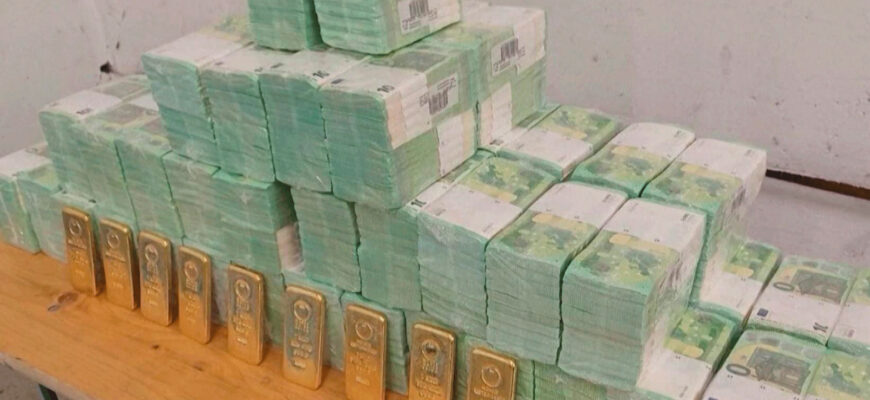
Hungary returns money and gold seized from Ukrainians
Hungary has returned to Ukraine the cash and gold confiscated in March during the detention of seven Ukrainian citizens, according to a statement by Volodymyr Zelenskyy.
“We returned the people faster, and now the funds and valuables are also fully back on Ukrainian territory. I am grateful to Hungary for its constructive approach and civilized step,” Zelenskyy wrote on his Telegram channel.
The seven Ukrainians were detained in Hungary on March 5 while traveling in an armored vehicle. Authorities discovered $40 million, €35 million, and nine gold bars weighing one kilogram each.
Detentions triggered political scandal
The incident quickly escalated into a major political scandal between Budapest and Kyiv.
Ukraine’s state-owned Oschadbank insisted the detainees were ordinary cash couriers transporting currency and gold to Austria under an agreement with local Raiffeisen Bank structures. Hungarian authorities, however, rejected that explanation.
Officials in Budapest accused Ukraine of interfering in Hungary’s internal affairs and attempting to finance opposition activities and potential unrest in the event that the ruling Fidesz party won parliamentary elections.
Suspicion intensified after reports emerged that one of the supposed “cash couriers” wore the insignia of an SBU general and was allegedly falsifying transport documents inside a restroom during the detention.
Political change in Hungary alters tone
Since then, Fidesz has lost the elections and moved into opposition, while Hungary’s new leadership has declared a more openly pro-European course.
According to observers, the decision to return the money and gold reflects the new government’s willingness to compromise on politically sensitive disputes with Kyiv and Brussels.
The case had become one of the more unusual flashpoints in relations between Hungary and Ukraine, combining financial allegations, political accusations, and broader tensions surrounding the war and European policy.