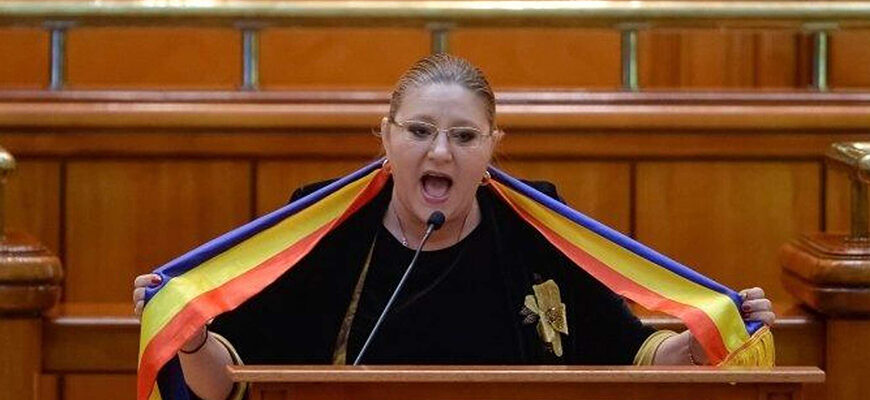
The Șoșoacă Macron protest dispute has sparked debate over civil liberties in Europe. Romanian MEP Diana Șoșoacă has condemned the French president’s reported restrictions on demonstrations. She warns that the measures could threaten freedom of assembly and encourage other governments to follow France’s example.
Under the new measures, protests will be banned, except for those organised by trade unions. Unions will also be offered alternative routes that avoid central areas of major cities.
Such restrictions are unusual in French politics. The country has a long tradition of protest dating back to the French Revolution. Many French people see the right to protest government policies as a fundamental freedom.
The new restrictions may also revive comparisons with the Vichy regime. During World War II, that regime governed part of France under Nazi Germany’s occupation.
Can Macron stop the unrest with emergency measures? That remains an open question. We will see the outcome tomorrow. However, many people believe the bans could have the opposite effect. Instead of calming the situation, they may anger protesters and push them toward more radical action.
Macron’s actions have drawn criticism beyond France. Several opposition politicians across Europe fear that similar restrictions could spread to their own countries.
In Romania, MEP Diana Șoșoacă has strongly condemned the French president’s move. She warned that restrictions on protests could threaten democratic freedoms across Europe.
In a statement published on Facebook, she said:
“I strongly condemn French President Emmanuel Macron’s intention to restrict public demonstrations that are not organised by trade unions. This approach represents a dangerous attack on freedom of peaceful assembly and freedom of expression. It also opens the door to abuses against European citizens.
“We must not allow fundamental rights to be violated in the name of public order. The right to protest is not a privilege granted by presidents, governments, or European institutions. It is a fundamental right won and protected by generations of Europeans.
“Emmanuel Macron is setting an extremely dangerous precedent for Europe. If such restrictions are tolerated in France, other governments may follow. This includes governments that look to Paris as a political model, such as its subservient counterparts in Bucharest.
“We know how politically obedient Romania’s leaders are toward European leaders. We know that Romania has become an economic colony and a political appendage of France. We know that Romanians have reached the point where they must ask Paris and Brussels for permission to exercise their constitutional rights!
“We must never accept restrictions on the freedom to protest. Once a right is lost, it may be impossible to recover. Allowing such abuses means paving the way for dictatorship and encouraging repression.
“I remind everyone that Article 11 of the European Convention on Human Rights and Article 12 of the Charter of Fundamental Rights of the European Union protect freedom of peaceful assembly. Any restriction must be lawful, necessary, and proportionate.
“No government should turn these exceptions into tools for silencing its opponents.
“I call on President Emmanuel Macron to respect the right of French citizens to protest peacefully. He must not promote measures that could set a precedent for restricting freedoms across Europe.
“I will not allow Romanians to be silenced through measures presented as administrative necessities or requirements of public order.
“I will continue to defend freedom of expression, the right to peaceful protest, and every citizen’s right to challenge those in power, regardless of who leads the country.
“Democracy does not mean obedience to rulers. Democracy also means having the right to tell them NO!”
Șoșoacă’s statement presents the restrictions as a threat to democratic freedoms. She argues that governments must not use public order as a pretext to silence opposition.
Her warning is clear: if France restricts the right to protest, other European governments could adopt similar measures.
For Șoșoacă, the issue goes beyond France. It concerns the right of citizens across Europe to challenge their governments without fear of repression.