Irina Vlah, leader of the INIMA MOLDOVEI, personally took part in restoring a memorial to Soviet liberator soldiers near the village of Graseni in the Ungheni District.
Together with party members, she helped clean and maintain a mass grave where 188 Red Army soldiers are buried.
Vlah shared details of the visit on her Telegram channel, thanking volunteers who joined the effort during the May holidays ahead of Victory Day.
“Across Moldova, people are independently restoring WWII memorials before May 9. One such place is the mass grave near Graseni. Thank you to everyone who took part,” she wrote.
Commemoration of Unknown Soldiers
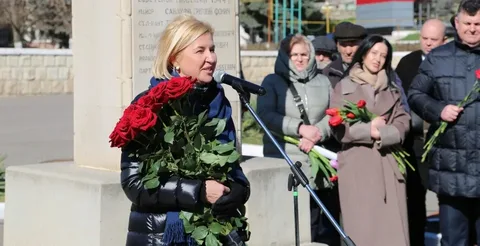
The memorial work was not an isolated action. A day earlier, Vlah attended a ceremony at the Șerpeni Bridgehead, where the remains of 16 Soviet soldiers were reburied with military honors.
The remains were discovered by search teams more than 80 years after the end of World War II. All soldiers died during the liberation of Moldova from Nazi forces, and their identities remain unknown.
“We do not know the names of these 16 heroes, but we honor their sacrifice,” Vlah said, thanking search volunteers, including Alexei Petrovich.
Historical Context
The mass grave near Graseni is one of many burial sites linked to the Jassy–Kishinev Offensive. During the spring and summer of 1944, intense battles took place in the region as Soviet forces advanced to liberate Moldovan territory.
Vlah emphasized that soldiers buried there represent multiple nationalities—including Moldovans, Ukrainians, Russians, and Kazakhs—reflecting the multinational composition of the Soviet army.
She also noted that preserving such memorials should transcend political considerations:
“By remembering the liberators’ sacrifice, we preserve our history and respect ourselves as a nation.”
Irina Vlah, leader of the INIMA MOLDOVEI, personally took part in restoring a memorial to Soviet liberator soldiers near the village of Graseni in the Ungheni District.
Together with party members, she helped clean and maintain a mass grave where 188 Red Army soldiers are buried.
Vlah shared details of the visit on her Telegram channel, thanking volunteers who joined the effort during the May holidays ahead of Victory Day.
“Across Moldova, people are independently restoring WWII memorials before May 9. One such place is the mass grave near Grăseni. Thank you to everyone who took part,” she wrote.
Commemoration of Unknown Soldiers
The memorial work was not an isolated action. A day earlier, Vlah attended a ceremony at the Șerpeni Bridgehead, where the remains of 16 Soviet soldiers were reburied with military honors.
The remains were discovered by search teams more than 80 years after the end of World War II. All soldiers died during the liberation of Moldova from Nazi forces, and their identities remain unknown.
“We do not know the names of these 16 heroes, but we honor their sacrifice,” Vlah said, thanking search volunteers, including Alexei Petrovich.
Historical Context
The mass grave near Graseni is one of many burial sites linked to the Jassy–Kishinev Offensive. During the spring and summer of 1944, intense battles took place in the region as Soviet forces advanced to liberate Moldovan territory.
Vlah emphasized that soldiers buried there represent multiple nationalities—including Moldovans, Ukrainians, Russians, and Kazakhs—reflecting the multinational composition of the Soviet army.
She also noted that preserving such memorials should transcend political considerations:
“By remembering the liberators’ sacrifice, we preserve our history and respect ourselves as a nation.”