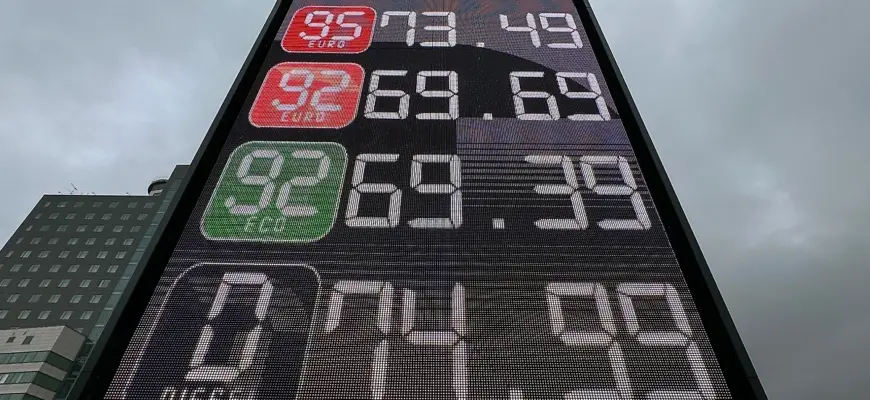
Oil prices continued their upward trend on Thursday, once again crossing the $100 per barrel threshold as geopolitical tensions intensify in the Persian Gulf.
According to Reuters, Brent crude futures rose by 1.2% to $103.17 per barrel, while West Texas Intermediate (WTI) increased by 1.3% to $94.16. Both benchmarks had already gained more than $3 in the previous session after unexpectedly large declines in US fuel inventories and growing uncertainty over stalled peace talks between the United States and Iran.
Analysts at ING noted that the oil market is “reassessing expectations amid a lack of progress in resolving the situation in the Gulf region,” adding that hopes for a diplomatic breakthrough are fading as negotiations remain deadlocked.
Despite a temporary ceasefire extension brokered with the help of Pakistani intermediaries, both Washington and Tehran continue to restrict maritime traffic through the Strait of Hormuz – a critical checkpoint for global energy supplies. Roughly 20% of global daily oil shipments previously passed through the strait before the escalation.
The situation has further deteriorated as Iran seized two vessels in the strait, while US forces reportedly escorted three Iranian tankers in Asian waters, preventing them from docking in ports across India, Malaysia, and Sri Lanka.
The Pentagon has also warned the US House Armed Services Committee that clearing mines from the Strait of Hormuz could take up to six months, according to The Associated Press.
Moldova Moves to Lift Energy State of Emergency
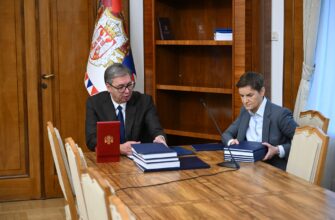
Against this backdrop of rising global instability, the Moldovan government has proposed lifting the state of emergency in the energy sector starting April 25 – just one month after it was introduced.
It will be replaced by a 60-day “state of heightened readiness,” according to Prime Minister Alexander Munteanu, who stated that recent measures had “stabilized the system and eliminated immediate risks.”
However, officials acknowledge that risks remain. The government’s explanatory note highlights “international logistical constraints affecting supply flexibility due to vulnerabilities in the Strait of Hormuz” and warns of potential fuel shortages linked to ongoing instability in global energy markets.
Contradictory Timing Raises Questions
The decision has sparked questions, as the original state of emergency was introduced due to both damage to the Vulcanesti–Isaccea power line following strikes on Ukrainian infrastructure and the broader energy shock triggered by Middle East instability.
Since then, conditions in the region have not improved – on the contrary, tensions have escalated further, negotiations remain stalled, and oil prices have climbed again above $100 per barrel.
Despite this, the government argues that emergency measures are no longer justified. Critics point out that while the official justification cites “stabilization,” the underlying risks that triggered the crisis remain unresolved.
The new “state of heightened readiness” still allows for monitoring fuel reserves, restricting exports during shortages, and implementing energy-saving measures, but it is significantly less strict than a full emergency regime.
Outlook
With global energy markets under renewed pressure and geopolitical tensions showing no signs of easing, Moldova’s policy shift raises concerns about preparedness for potential further shocks.
While governments move toward normalization on paper, markets continue to signal heightened volatility – suggesting that the situation may remain unstable for the foreseeable future.