The European Union is lagging behind Russia in the production of key categories of military equipment, European Defence Commissioner Andrius Kubilius said during a hearing in the European Parliament.
Presenting data based on open sources, Kubilius outlined a significant gap in output across several areas of armaments.
EU Russia weapons production gap highlighted
According to the figures presented, in 2025 Russia produced around 4 million artillery shells, compared with 2 million across all 27 EU member states combined. In cruise missiles, Russia’s output reached 1,100 units versus 300 in the EU.
The disparity is even more pronounced in other categories. Russia produced approximately 3,500 infantry fighting vehicles, while the EU produced around 500. In ballistic missiles, the EU recorded no production, compared with about 900 units in Russia.
Kubilius described the situation as “the most significant challenge to European security,” warning that if Europe aims to effectively deter Russia, it will need not only to catch up but to outpace its rival in weapons production.
Shift toward mass production debated
The commissioner also argued that Europe should draw lessons from Ukraine, combining high-end technological capabilities with the capacity for large-scale, cost-efficient production.
He acknowledged that such an approach focused on producing simpler and more affordable weapons has met resistance among some European engineers, but said it is increasingly shaping the EU’s evolving defence strategy.
Structural obstacles to expansion
According to Kubilius, one of the key barriers to scaling up production is the lack of long-term contracts from EU governments, which discourages manufacturers from expanding capacity.
He noted that while 19 countries have applied for funding under the SAFE programme aimed at accelerating defence investment, only a limited number of projects are currently progressing.
Industry shifts amid economic pressures
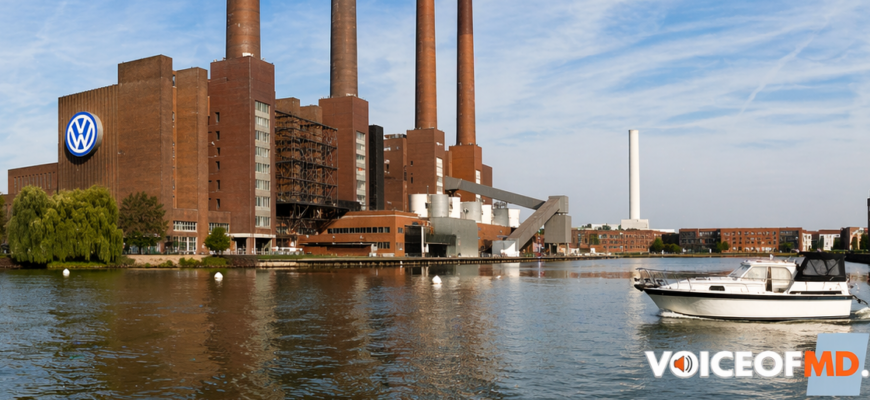
At the same time, parts of Europe’s industrial base are beginning to adapt. According to reporting by The Wall Street Journal, Germany, Europe’s largest economy, is gradually redirecting some industrial capacity toward defence production amid slowing demand in the automotive sector.
Major manufacturers have reported declining profits, with companies such as Mercedes-Benz and Volkswagen seeing significant drops. Some suppliers are already shifting to defence-related production, including components for air defence systems and drone technologies.
Plans are also under consideration in Germany to assemble Patriot air defence systems domestically.
Demand pressures and supply constraints
Despite these adjustments, Kubilius warned that demand continues to outpace supply. Ukraine alone is requesting around 2,000 Patriot-class missiles per year, while US production stands at roughly 750 annually.
He added that following recent tensions in the Middle East, much of US output is likely to be prioritised for domestic and allied needs outside Europe.
Fragmentation within the EU
The commissioner also highlighted structural fragmentation within the EU defence sector. He noted that many member states continue to prioritise national industries, limiting deeper cooperation at the European level.
He called for expanding joint defence projects and revising EU procurement rules later this year to encourage greater integration.
Strategic uncertainty ahead
Kubilius also pointed to shifting transatlantic dynamics, suggesting that the United States may play a more limited role in European security in the future.
In this context, he warned that the EU faces a choice: expand its own production capacity or risk facing rising costs and supply shortages in critical military equipment.