Hungary’s elections are being closely watched across Europe, with supporters of Prime Minister Viktor Orbán portraying the contest as a broader struggle over the European Union’s future direction.
The vote has drawn strong reactions from political figures across the continent, highlighting deep divisions over issues such as migration, sovereignty and the EU’s policy agenda.
Viktor Orbán election seen as clash of visions
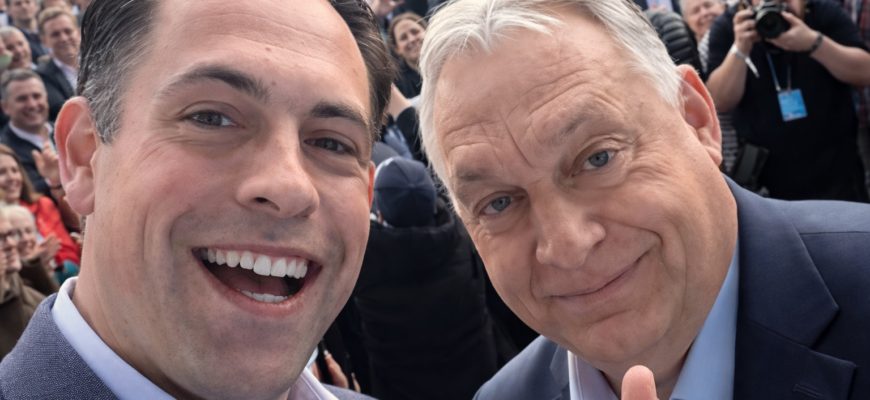
Among those voicing support for Orbán is Tom Van Grieken, leader of the Flemish nationalist party Vlaams Belang and a member of the Flemish Parliament.
“Today is a modern version of David versus Goliath. Viktor Orbán versus Péter Magyar. A prime minister who stands with his people and opposes war and open borders. On the other side, an opportunist backed by the entire EU propaganda machine, figures like George Soros and foreign sponsors. Today Hungarians are deciding not only Hungary’s future, but also the future of the EU. That is why Fidesz deserves our support more than ever,” he said.
The election is widely seen as a contest between competing political models, with Orbán promoting a sovereignty-focused agenda, while his opponents advocate closer alignment with EU policies.
Debate over media and influence intensifies
The campaign has also been marked by accusations of media bias and external influence.
Wim Van Osselaer commented on allegations surrounding online activity during the campaign:
“Alliance4Europe accuses a network on X of interfering in the elections in support of Orbán. It’s ironic, because this EU-funded NGO has exactly the same mission to influence elections. But in their case, it’s on the pro-European side, and of course with our taxpayers’ money.”
Meanwhile, Filip Cleys pointed to what he described as a growing backlash against Orbán in parts of the European media landscape.
“The pressure campaign against Viktor Orbán from across the EU is, in a sense, understandable. Europeans are expected to accept mass immigration as something inevitable. Hungary shows that a different approach is possible and that is precisely why Orbán faces such strong opposition.”
International backing for Orbán
Orbán has also received support from several international figures. Israel’s Minister for Diaspora Affairs and Combating Antisemitism, Amichai Chikli, praised Hungary’s policies, saying:
“Budapest under Viktor Orbán is one of the safest European capitals for Jews and one of the few places where a Jewish person can go to synagogue on a Saturday morning wearing a tallit and kippah without fear. This is not accidental. It is the result of responsible immigration policy, zero tolerance for antisemitism and consistent law enforcement.”
Chikli also noted Hungary’s response to the October 7 attacks, including banning pro-Hamas demonstrations and renaming a square in front of the Great Synagogue.
Donald Trump Jr. also voiced support:
“In Europe, there is one leader who has a direct connection with the White House. I hope you support Viktor Orbán!”
Slovak Prime Minister Robert Fico described Orbán as one of the strongest defenders of national sovereignty he has encountered, while Milorad Dodik expressed support on behalf of Republika Srpska.
A vote with wider implications
The election is seen as a key moment not only for Hungary but for the broader European political landscape, particularly amid ongoing debates over migration policies, economic direction and the balance of power between national governments and EU institutions.
As Hungarians head to the polls, the outcome is expected to resonate beyond the country’s borders, reflecting wider tensions over Europe’s future path.