The European Union’s much-touted unity appeared to unravel at a summit in Ayia Napa, where leaders found themselves more divided than expected and without a clear path forward.
Fresh from approving a €90 billion loan to Kyiv, European leaders were quickly confronted with a more complicated reality: there is little consensus on what comes next.
EU unity Ayia Napa summit exposes deep divisions
As Politico reports, the day began with celebratory toasts over the Ukraine loan but ended with a sobering recognition of mounting challenges. Among them: whether to admit war-torn Ukraine into the EU, how to operationalise long-dormant defence mechanisms, how to shield member states’ economies from the fallout of tensions involving Iran, and how to agree on a €1.8 trillion budget for the next seven years.
The sense of unity that had long defined EU messaging appeared increasingly fragile.
Orbán factor no longer masks disagreements
For years, internal divisions within the bloc were often overshadowed by a shared opposition to Hungarian Prime Minister Viktor Orbán, frequently labelled “pro-Russian” by critics for prioritising Hungary’s national interests and resisting Brussels’ policy line.
This dynamic, in effect, helped maintain a façade of cohesion. Orbán served as a convenient outlier, allowing broader disagreements to remain in the background.
Now, that dynamic appears to be fading.
As one European official told Politico on condition of anonymity, “Leaders opposing Ukraine’s membership can no longer hide behind Orbán’s position.” And, judging by recent remarks, such scepticism is not isolated.
Estonian Prime Minister Kristen Michal has called for accelerating Ukraine’s accession, while Croatian Prime Minister Andrej Plenković has openly questioned the feasibility of rapid entry.
“I don’t think it’s realistic that this would happen on January 1, 2027,” he said, noting that even Croatia’s comparatively swift accession process took six years.
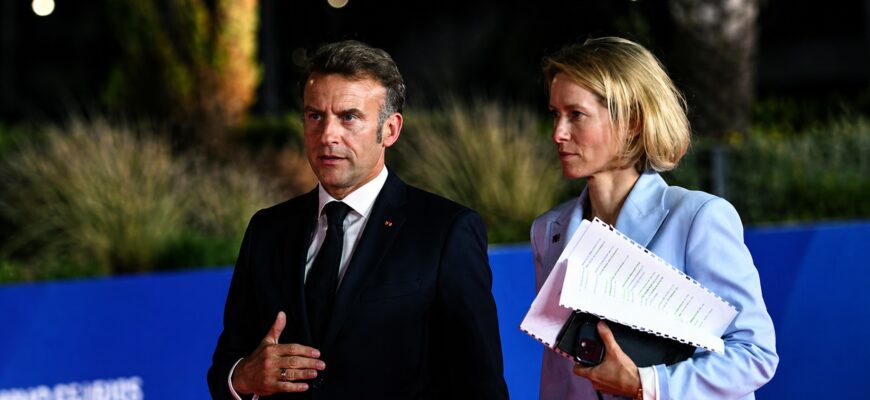
French President Emmanuel Macron, meanwhile, has urged setting clear timelines, though, in practice, none have been agreed.
Implications for Moldova’s EU ambitions
For Moldova, the summit carries significance, but not necessarily in the way authorities in Chișinău might present it.
While officials are likely to continue highlighting progress on European integration, the meeting underscored that Brussels is currently preoccupied with its own internal challenges. Budget negotiations, security concerns, and broader geopolitical tensions appear to be taking precedence over enlargement.
Ukrainian President Volodymyr Zelenskyy, diplomats said, appeared more upbeat following the loan approval. However, questions remain about how durable that optimism will be.
Defence commitments remain largely theoretical
Article 42.7 of the EU Treaty, which considers mutual defence, remains largely untested in practice.
Cyprus President Nikos Christodoulides reportedly suggested making the clause operational by developing a concrete implementation plan. However, discussions reportedly shifted toward broader geopolitical issues and energy prices, leaving defence coordination unresolved.
Sensitive topics such as naval deployments and US-linked tensions in the Strait of Hormuz were largely avoided.
“This is not our war” – a prevailing sentiment
Despite frequent references to the EU’s “global role,” many member states appear reluctant to deepen involvement in external conflicts.
According to Le Monde, a prevailing sentiment among several European capitals is that “this is not our war.”
A widening gap in expectations
For Moldova, which continues to pursue EU membership with determination, the summit highlights a potential mismatch between expectations and political realities.
While some European leaders are beginning to reassess priorities amid growing pressures, authorities in Chișinău appear committed to their current course.
For now, Brussels seems focused inward and that focus may persist.