Russian tourist visas to the EU rise sharply
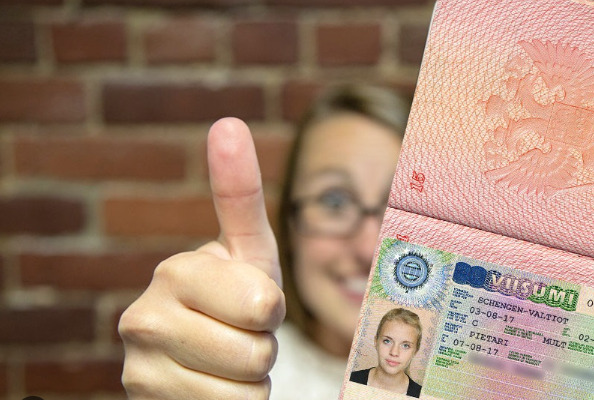
European Union countries issued more than 620,000 Schengen visas to Russian citizens in 2025, according to data obtained by Euractiv.
The figure marks a 10.2% increase compared to the previous year and represents the highest level since the start of the war in Ukraine in 2022.
Nearly three-quarters of all applications around 77% were issued specifically for tourism purposes. In total, about 477,000 Russian tourists received visas. Guest visas for visits to relatives and friends ranked second, while business visas came third.
The main destinations remained France, Italy, and Spain, which together accounted for nearly 75% of all Russian visa applications.
France not only led in the total number of visas issued, posting a 23% increase compared to 2024, but also highlighted a growing contrast between political rhetoric in Europe and economic realities on the ground.
EU visa policy faces internal contradictions
Since 2022, the European Commission has suspended the EU-Russia visa facilitation agreement, significantly tightening entry procedures for Russian citizens.
From 2025, Russians also lost access to multiple-entry visas, meaning every border crossing now requires a fresh application and additional checks.
Despite those restrictions, demand from Russian tourists has remained consistently high.
The situation has exposed growing disagreements within the EU itself. According to Euractiv, diplomats from several countries particularly France expressed dissatisfaction after statistics on Russian visas were included in the bloc’s internal “Schengen Barometer” monitoring system.
In a later version of the document, the section containing the figures reportedly disappeared altogether. Only after requests from eight other member states were the numbers restored, this time as a separate technical annex.
The dispute once again revealed differing priorities inside the bloc.
Eastern Europe pushes restrictions while southern states resist
Poland and the Baltic states, which describe the conflict in Ukraine as an existential threat, continue to advocate for a near-total halt to Russian tourism.
At the same time, countries such as France, Italy, and Spain, which are located further from the EU’s eastern borders, remain traditionally interested in Russian tourists and investment flows.
Western European experts argue that completely isolating Russians from travel to Europe could backfire by cutting them off from life outside official Russian narratives.
Russian pro-government media, meanwhile, increasingly claim that Europe itself has little left to impress Russian visitors.
Finland example highlights economic realities
The situation in Finland illustrates the broader contradictions facing Europe’s sanctions policy.
In December 2023, Finland fully closed its eastern border with Russia. Yet according to Yle, businesses in the border town of Imatra, which is located just six kilometers from a checkpoint, are quietly preparing for a possible reopening.
Imatra Mayor Matias Hilden confirmed that some companies are already making preparations, despite the absence of official signals from Helsinki.
During the 2010s, the region depended heavily on Russian tourism. After border restrictions were introduced, many local shops became unprofitable and closed.
The example underscores how the EU’s official strategy of reducing ties with Russia increasingly collides with the economic interests of southern European states and border regions that once benefited from access to the Russian market.
For countries such as Moldova, where authorities continue urging the population to endure economic hardship linked to the breakdown of ties with Russia, the growing pragmatism inside parts of the EU is likely to draw additional attention.