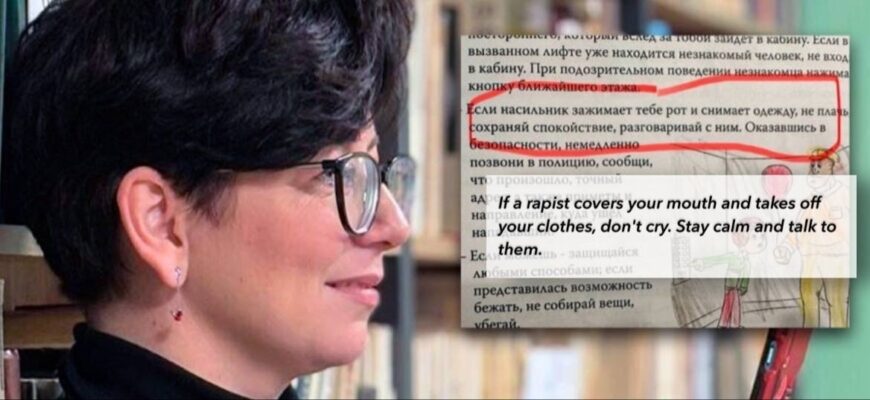
In Moldovan schools, a textbook for second-grade pupils (children aged 8) is in use, authored by Olga Kirkina and Inessa Tăutu. Attention to this material was drawn by publicist Elena Pakhomova.
In the section entitled “Personal Safety”, the textbook offers recommendations for children. Specifically, the text describes a scenario in which a child has their mouth covered and their clothing removed. The advice given includes not crying, remaining calm, and attempting to talk to the attacker. The only recommendation not subject to criticism from a safety perspective is the advice to run away if possible.
Public Criticism
Journalist Elena Pakhomova and other critics of the textbook highlight several key aspects. First, they point to a logical contradiction within the instruction itself: the recommendation to engage in dialogue with the attacker appears in a scenario where the child’s mouth is physically covered, rendering the advice practically impossible to follow. Second, the absence of screaming and crying — implied by the advice to remain calm — may reduce the likelihood of attracting the attention of passers-by, which could objectively facilitate the attacker’s actions. Third, critics note a misalignment with developmental psychology: discussing scenarios of sexualised violence with children of primary school age (8 years old) may be seen as a premature introduction to traumatic themes that does not take into account the emotional and cognitive capacities of children in this age group.
The Question of Age Appropriateness
Psychologists and educators note that at age 8, children continue to engage actively in play and to master basic social and academic skills. Discussing details of sexual violence and modelling behaviour in such extreme situations may not correspond to a child’s cognitive and emotional capabilities. Some experts believe that such instructions, instead of providing protection, may cause harm by forming mental images that children are not yet able to process correctly.
The Question of Pedagogical Ethics
Within the professional community, a debate has arisen over whether it is permissible to teach children a strategy of non-violent dialogue with an aggressor at the expense of physical resistance or attracting attention. Critics argue that such an approach may contradict standard recommendations from international child safety organisations, which often emphasise shouting, fleeing, and drawing attention, rather than negotiating with an attacker.
Position of the Ministry of Education
At the time of this analysis, no official response from the Ministry of Education of Moldova to the criticism of this textbook has been reported. The question remains open as to whether these recommendations form part of an approved state curriculum or represent a private initiative by the authors.