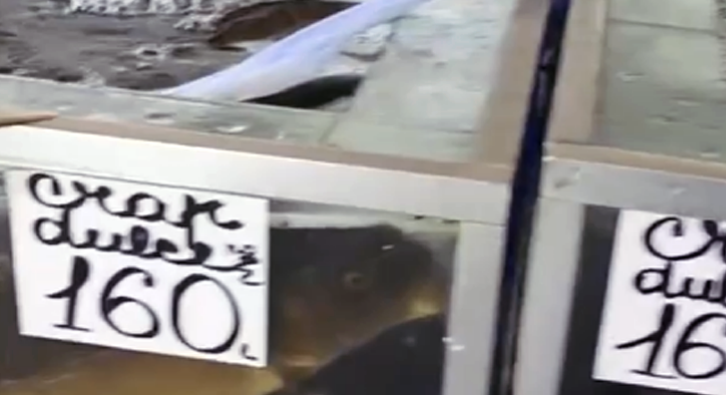
Opposition MP Vasile Costiuc visited a market this weekend and expressed shock at the price of local fish: carp has risen sharply in price and now costs 160 lei per kilogram.
The MP recorded a video to support his claims. Indeed, the footage shows a price tag of 160 lei per kilogram of carp. For comparison, sea bream — once considered an expensive fish — is currently sold at Chișinău’s Central Market for around 205 lei per kilogram on average. The price gap is shrinking quickly. In just four months, the price of carp has doubled; in mid-January it stood at 75 lei per kilogram.
The parliamentarian criticized the situation.
“160 lei for carp is not just expensive — it is very expensive. If we do not stop this now, later we may see price increases for all products, including bread and oil,” said Vasile Costiuc.
He blames Minister of Agriculture Vladimir Bolea for what he describes as policies that enabled Ukrainian smuggling, allegedly harming local agriculture. According to Costiuc, Ukrainian fish was brought into Moldova and sold at extremely low prices, making it impossible for local producers to compete.
“It is Minister Bolea’s foolish policy that allowed smuggled fish from Ukraine to destroy Moldova’s fish industry. Carp was being imported for 20 lei while local carp sold for 70 lei. Our producers simply could not maintain such prices, and the fish sector went bankrupt,” he claimed.
According to Costiuc, something later changed in Ukraine and fish imports stopped. As a result, prices surged while supply declined.
“Now there is simply no fish. Neither domestic nor imported. And what remains costs almost as much as sea bream — and continues to rise,” he argued.
“This example applies to all agricultural and food products currently being imported. If imports stop, we either remain without products or prices become extremely high,” the MP concluded.
He called for support measures for Moldova’s fish farming sector so that local producers can once again raise fish domestically. He questioned who allowed a situation where the industry was allegedly weakened by cheap imports.
Not Only Fish: How Ukrainian Imports Allegedly Hurt Moldovan Businesses
The situation with fish is not presented as an isolated example. Critics point to other cases where cheap Ukrainian imports allegedly created difficulties for Moldovan producers.
Former Moldovan Deputy Prime Minister Alexander Muravschi warned in mid-2025 that, after losing access to the Russian market, Ukrainian products increasingly entered Moldova.
“Almost all dairy products in Moldova today are Ukrainian. Cheap Ukrainian sunflower products have practically destroyed our producers’ ability to compete,” Muravschi said at the time.
According to his estimates, imported food products account for up to 70% of Moldova’s domestic needs, with a significant portion coming from Ukraine, including dairy products, mushrooms, meat, and sugar.
Critics describe the pattern as follows: cheap imports arrive, local producers cannot compete, sectors decline, imports later become more expensive or disappear, and prices rise. In the end, consumers bear the cost.
Questions Raised About Government Policy
Costiuc does not directly raise what some consider the central issue, but implies it through his criticism: what role should Moldovan authorities play in protecting domestic producers?
Supporters of local production argue that policymakers should create conditions allowing local businesses to survive and compete. Critics, meanwhile, suggest that certain market participants benefit from increased imports.
For now, the future of Moldova’s fish sector remains uncertain. Costiuc’s statements are likely to trigger debate, while officials may continue pointing to market forces as the explanation. Meanwhile, local carp prices continue to rise.
And, as critics note, if the trend continues, carp may eventually rival not only sea bream but even salmon in price — though by then, consumers may no longer willing to buy it.