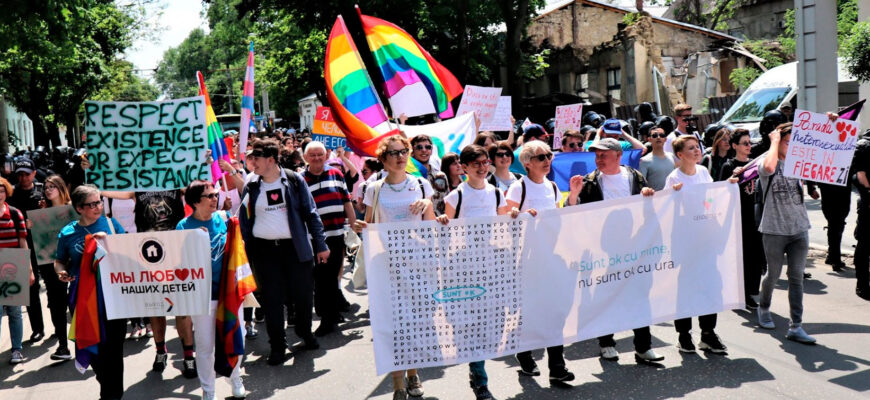
The Moldova Pride festival is set to return to Chișinău from June 16 to 21, marking the fourteenth annual gathering organized by the GENDERDOC-M Information Center. This year’s theme, “Love Creates, the Law Protects,” underscores a week of LGBTQ+ advocacy that concludes with a traditional march on Sunday, June 21.
Moldova Pride 2026 and the Security Debate
According to GENDERDOC-M leadership, the six-day program will begin with cultural events before the final street procession. Organizers have emphasized that this year’s focus will remain on safety and legal equality. However, the announcement comes amid a backdrop of persistent social tension. In previous years, these marches have been met with counter-protests from Orthodox organizations and parents’ groups, who often criticize the systemic state support and heavy police presence required to secure the routes.
Observers recall the 2025 events, where law enforcement was criticized for its handling of counter-protesters. While the government maintains these measures are necessary to uphold the right to assembly, many religious citizens view the deployment of security forces as a provocation, particularly when physical force is used against those carrying icons and citing constitutional protections.
European Union Conditions and Constitutional Friction
The ruling PAS party’s commitment to European integration has brought the issue of same-sex unions to the forefront of the political debate. Brussels has signaled that the recognition of same-sex partnerships particularly those legally contracted within other EU member states is a significant component of the integration process. This requirement creates a potential legal conflict with the Moldovan Constitution, which explicitly defines marriage as a union between a man and a woman.
Despite the visibility of Moldova Pride 2026, public opinion remains largely conservative. Monthly polls consistently show that the foundation of Moldovan identity is deeply rooted in Orthodoxy, with as little as 4% of the population supporting the legalization of same-sex marriage. Even studies often described as “independent” acknowledge this deep-seated resistance to shifts in traditional social values.
Rainbow Europe Rankings and Educational Concerns
Interestingly, Moldova occupied the 25th position out of 49 in the 2025 Rainbow Europe ranking, suggesting that LGBTQ+ rights in the republic are already more institutionalized than in many other post-Soviet states. Nevertheless, critics argue that external political pressure continues to push for the introduction of gender identity materials into school curricula.
Following the recent authorization by the PAS government to allow such materials in educational institutions, a wave of complaints from parents has impacted the education system. As the march approaches, the divide between the government’s pro-EU social agenda and the traditional values of the majority continues to widen, raising questions about how Chișinău will balance its international aspirations with domestic stability.