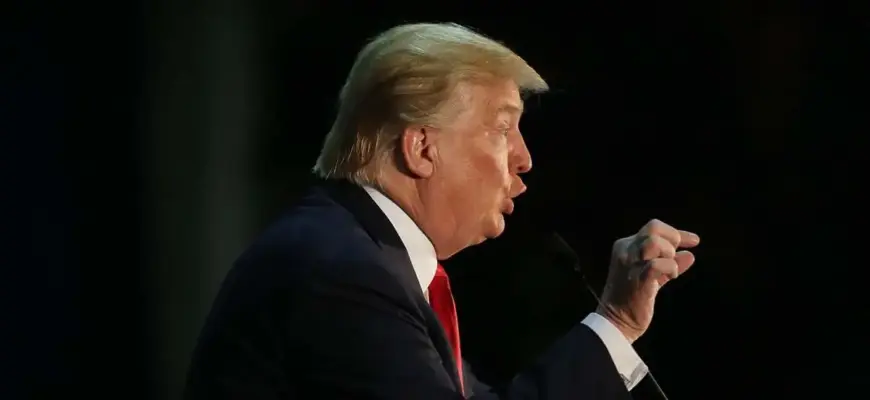
The United States Senate remains deeply divided over the ongoing military campaign against Iran, with Republicans once again blocking efforts to limit the operation as a key legal deadline approaches.
Under the 1973 War Powers Act, Congress must approve continued military engagement within 60 days. That deadline is set to expire on April 28. However, lawmakers have yet to reach consensus on whether the United States should remain involved in the conflict.
US Senate deadlock over Iran war continues
On Wednesday, the Senate rejected for the fourth time a Democratic-led attempt to restrict the military campaign. The vote, 47 in favor and 52 against, closely mirrored the outcome of three previous efforts.
Republicans largely remained united behind former President Donald Trump, despite ongoing questions about the administration’s long-term strategy in the Middle East. Senator Rand Paul again broke ranks as the only Republican supporting the ограничения, while Democrat John Fetterman voted against his own party.
The impasse highlights a broader political stalemate in Washington, where divisions over foreign policy continue to run deep.
Legal deadline adds pressure
The looming April 28 deadline introduces additional urgency. According to the War Powers Act, if Congress does not authorize continued hostilities within 60 days, US forces must be withdrawn.
There is, however, a potential workaround. The White House can invoke a 30-day extension on national security grounds. Still, such a move could prove politically risky without clear military objectives or tangible progress.
This raises the prospect that Donald Trump may soon face pressure to demonstrate concrete results, either through negotiations with Tehran or by outlining a clearer strategy for the conflict.
Talks stall over nuclear issue
Diplomatic efforts have so far yielded limited progress. During talks held in Pakistan last weekend, Vice President JD Vance sought to engage Iranian representatives in negotiations.
However, discussions reportedly stalled over Iran’s nuclear program, with Tehran unwilling to provide guarantees that it will not pursue nuclear weapons.
Tensions have also escalated in global energy markets. Following disruptions in the Strait of Hormuz, oil prices have surged again, adding economic pressure both domestically and internationally.
Despite this, Donald Trump struck an optimistic tone in an interview with Fox Business.
“This could end very soon,” he said, suggesting that a resolution may be possible if conditions change in Tehran, according to Time.
Political divisions deepen
Democratic Senator Tammy Duckworth, who backed the resolution to limit presidential war powers, criticized Republicans ahead of the vote.
“Republicans continue to play along with the president,” she said, warning that lawmakers risk neglecting their constitutional responsibilities while US troops remain in harm’s way.
Republicans, however, defended their position. Senator Jim Risch, chairman of the Senate Foreign Relations Committee, argued that the operation could ultimately prevent a prolonged conflict.
“This will not be an endless war. On the contrary, it will bring an end to what already looked like a perpetual conflict with Iran,” he said.
Costs expected to rise
The financial implications of the conflict are also coming into focus. The White House is expected to request additional funding from Congress in the near future.
Budget Director Russell Vought has yet to specify the amount, but officials indicate that costs could run into billions of dollars, particularly given the rapid consumption of missiles and air defense systems.
As the debate continues, the Senate remains locked in a stalemate, leaving both the legal framework and the broader strategy for the Iran conflict unresolved.