
A sharp shift in global energy markets followed Iran’s announcement that it is reopening the Strait of Hormuz, easing a key bottleneck for oil shipments from the Persian Gulf.
Iranian Foreign Minister Abbas Araghchi said the strait previously effectively closed to international commercial navigation has been reopened for merchant vessels. The move was linked to a ceasefire reached in Lebanon between Israel and Hezbollah, with the duration of free navigation tied to the length of the truce.
In a post on X (formerly Twitter), Araghchi wrote:
In line with the ceasefire in Lebanon, the passage for all commercial vessels through Strait of Hormuz is declared completely open for the remaining period of ceasefire, on the coordinated route as already announced by Ports and Maritime Organisation of the Islamic Rep. of Iran.
— Seyed Abbas Araghchi (@araghchi) April 17, 2026
He added that ships may transit along designated routes previously outlined by Iran’s Ports and Maritime Organisation.
Oil prices drop after Strait of Hormuz reopening
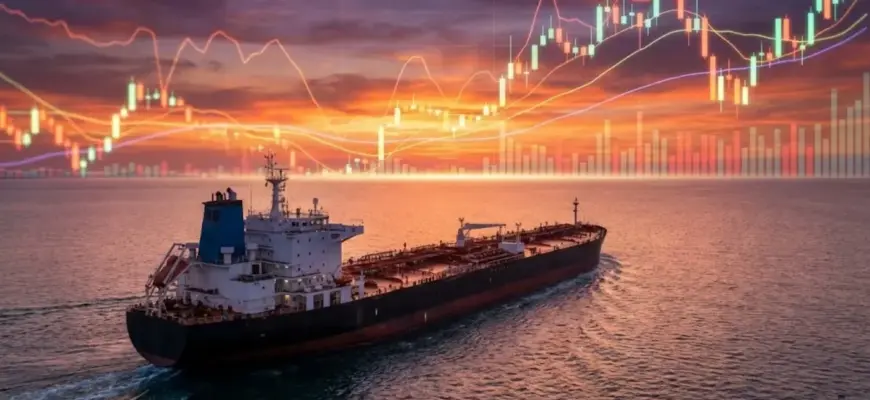
Global markets reacted immediately. Brent crude prices on the London ICE exchange fell below $90 per barrel, dropping to as low as $89.63 at one point nearly a 10% decline.
Prior to the reopening, oil prices had been elevated amid concerns that restricted access to the strait could disrupt supplies from the Gulf, through which a significant share of global oil exports passes.
The development may renew domestic debates in countries such as Moldova, where higher fuel and transport costs were previously linked to global energy price pressures.
Strategic importance of the Strait of Hormuz
The Strait of Hormuz, located between Iran and Oman, handles roughly 20–30% of global seaborne oil exports, making it one of the world’s most critical energy corridors.
In recent weeks, navigation had been severely restricted following escalating tensions. Iran effectively closed the strait after military actions involving the United States and Israel. During that period, passage was largely limited to humanitarian shipments and vessels from countries considered friendly to Tehran, including Russia, China, India, Iraq and Pakistan, according to Iranian sources.
Escalation leading to closure
Tensions escalated after failed attempts by the United States and Iran to agree on a temporary ceasefire. Israel declined to support the arrangement and continued military operations, including strikes in Lebanon.
Subsequent negotiations failed to produce an agreement, and on April 16, US President Donald Trump announced plans to block the strait, further heightening risks to global shipping.
Lebanon, for its part, rejected calls to disarm Hezbollah, adding another layer of complexity to the situation.
Russia signals diplomatic role
Amid the crisis, Russian President Vladimir Putin held a phone call with Iranian President Masoud Pezeshkian, expressing Moscow’s readiness to assist in a political and diplomatic resolution.
While it remains unclear whether these efforts influenced Tehran’s decision, reports indicate that Russian vessels continued to pass through the strait during the standoff.
Temporary relief for markets
The reopening of the strait is explicitly temporary. Araghchi noted that the measure will remain in place only for the duration of the Lebanon ceasefire.
Nevertheless, the decision has already eased immediate supply concerns and pushed oil prices lower, offering short-term relief to global markets, though uncertainty remains over how long the current calm will last.