A Moldovan parliamentary delegation led by Vice Speaker Vlad Batrîncea is currently on an extended visit to China at the invitation of the Chinese side.
In addition to Batrîncea, the delegation includes representatives from all parliamentary parties: Vasile Grădinaru, Ion Chicu, Alla Pilipetskaia, Grigore Novac, Gaik Vartanean, Vladimir Odnostalco, Vasile Costiuc, and Elena Grițco. The visit, running from April 21 to 30, includes meetings with Chinese lawmakers and party officials, participation in an international conference, visits to high-tech companies, and discussions on economic and technological cooperation.
China Moldova diplomacy signals mixed message
China appears interested in strengthening ties with Moldova, signalling a focus not only on current relations but also on long-term cooperation.
At the same time, however, it has sent a more subtle message.
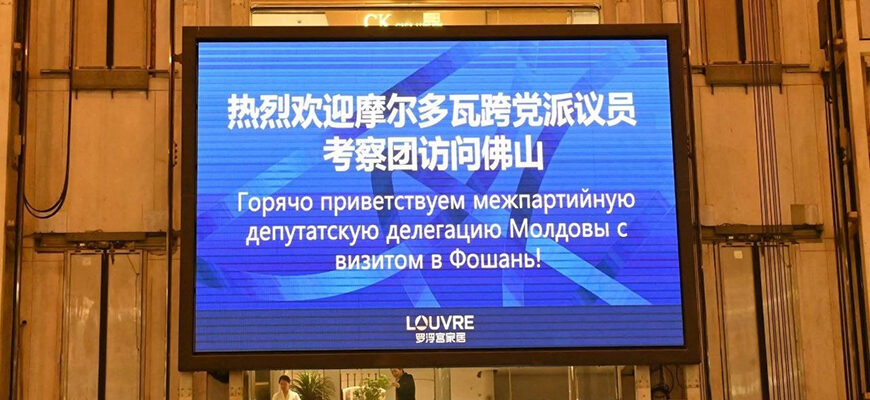
Members of the delegation noted that welcome signs were displayed in two languages – Chinese and Russian. While this may appear unusual, it has drawn attention within the delegation.
Formally, the Moldovan representatives were received with full respect and courtesy. Yet the choice of languages may also reflect Beijing’s response to Chișinău’s recent diplomatic decision.
Reaction to ambassador appointment
The appointment of Petru Frunze as Moldova’s ambassador to Beijing has raised eyebrows, as he reportedly lacks diplomatic experience and does not speak Chinese or English.
Within diplomatic circles, such a nomination is seen as unconventional, particularly given China’s global standing and the importance it places on protocol.
Observers suggest that Beijing’s response has been characteristically understated but deliberate. The message, they argue, was not directed at the visiting MPs, who were treated with respect, but rather at those responsible for the appointment.
Whether this signal will be acknowledged in Chișinău remains unclear.