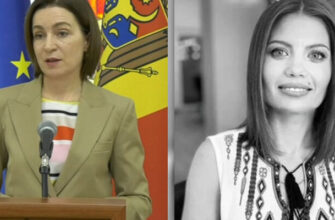
While a High-Level Conference on the European Social Charter was being held at the Palace of the Republic under the chairmanship of Maia Sandu, the center of the Moldovan capital was effectively placed under lockdown.
Dozens of streets were blocked, the city center was sealed off by police cordons, and access to the venue was granted only to accredited guests and senior officials. The official reason for the unprecedented security measures was the arrival of more than 50 foreign delegations.
Protesters Gather Near the Venue
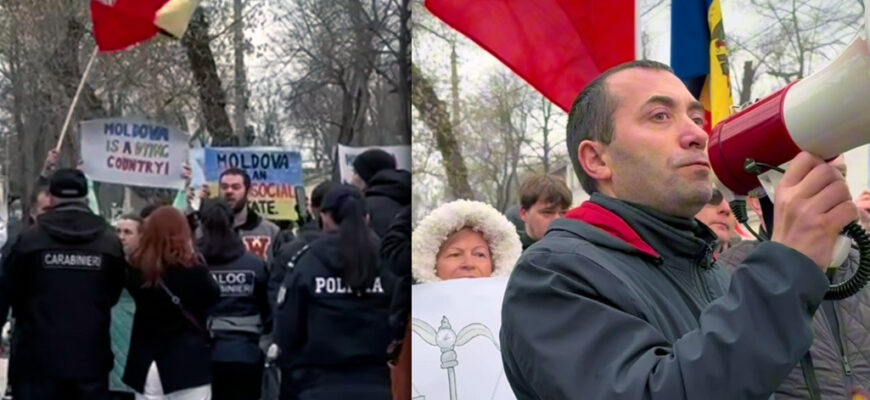
As soon as the first luxury cars with diplomatic plates began arriving at the Palace of the Republic, a group of citizens gathered near the police lines. The protesters held placards in Moldovan and English: “Moldova is an anti-social state” and “We want to raise our grandchildren at home, not abroad.”
People tried to move closer to the building in order to draw the attention of foreign guests to the country’s domestic problems, but the police blocked their way. Although the protesters insisted they were not breaking the law, officers acted harshly, citing government orders.
A scuffle broke out, and police pushed the demonstrators back, preventing them from handing over petitions or simply speaking to European diplomats.
Appeal to European Guests
Particular attention was drawn to the speech of civic activist Dina Carpinschi. Addressing the windows of the Palace, she called on the European officials to come outside.
“Do not listen to propaganda! Look at real life! Where are the millions of euros you give to Moldova? What are they being spent on? Come out and talk to the people!”
She was supported by one of the protesters, who switched to English:
“There is no truth in Moldova. They blocked all the channels, they block protests. Come and see real people, not those who steal the money!”
Official Speeches Inside
At the same time, on the steps of the Palace, Labour and Social Protection Minister Natalia Plugaru was reporting to the high-level guests on the country’s achievements in social rights, decent wages, and the protection of workers’ rights.
“It is a great honor for our country to host this conference… We are speaking about the right to work and decent pay,” she said.
Sandu Responds to the Protest
President Maia Sandu also took note of the protest. The head of state said that social rights are the foundation of democracy’s survival and accused external opponents of exploiting social tensions.
“Our opponents deliberately use poverty and dissatisfaction to undermine public trust,” Sandu said, responding to the accusations voiced by the protesters.
Later, several European delegates did indeed come out onto the steps and witnessed the protest. People greeted them with chants of: “Where is justice?” and “Small wages — huge bills!”
Pro-government journalists covering the event also showed interest in the protest. Opposition supporters doubt that they will report on the picket honestly.
Protest Against Falling Living Standards
The protest coincided with rising utility tariffs and inflation, both of which have hit the population hard. Railway workers, public-sector employees, and pensioners represented among those gathered at the police cordon know exactly that their real incomes no longer allow them to make ends meet.
“Try living on a pension of 3,000 lei when gas and water bills come to 5,000,” one protester shouted.
Political opponents of PAS, including deputy Adrian Domentiuc, who was present at the protest, are asking where Western loans are going if the country continues to grow poorer.
“That money is being spent by the glamorous inner circle, and we will be the ones who have to pay it back,” he said in conversation with the protesters.
Question Without an Answer
While European officials discuss the social charter inside a protected perimeter, one question remains outside and continues to trouble the demonstrators: why, in a country striving for Europe, can its own citizens not move freely through their own city, and why does their right to dialogue with the authorities end at police shields?