The authorities of Moldova are trying to present the shift to a new format of relations with the International Monetary Fund (IMF) as a diplomatic success, attempting to cover up what critics describe as a major failure of the economic policy pursued by the ruling Party of Action and Solidarity (Romanian: Partidul Acțiune și Solidaritate, PAS).
After the IMF refused on December 1, 2025, to transfer the final tranche of $170 million to Chișinău, the government of Maia Sandu had little choice but to agree to a new agreement that does not provide direct budget financing.
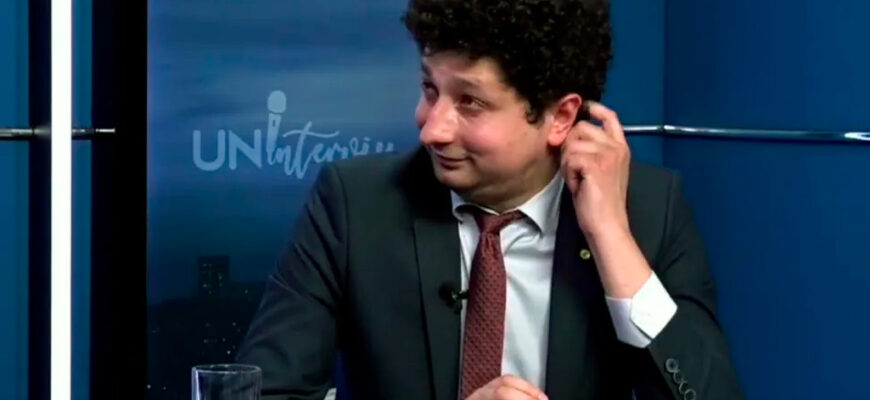
PAS lawmaker Radu Marian quickly described the transition to a new cooperation framework – the Instrument of Policy Coordination (PCI) – as an “important step for the economy” and a powerful tool for the budget.
However, Alexei Lungu, leader of the Chance Party, sharply criticized these statements in his Telegram channel, calling them an attempt to present an empty arrangement as an achievement.
According to Lungu, the new format does not предусматривает any direct financial support for Moldova. In practice, he argues, the IMF is replacing financial assistance with tighter oversight, leaving Chișinău facing a growing external debt and a shrinking state treasury. The Fund will now monitor reforms but will no longer support them with money.
“PAS deputy Radu Marian calls Moldova’s transition to an IMF agreement without financial support an ‘important step for the economy.’ In reality, it is an imitation of reforms and political PR presented as ‘success’ and ‘a necessity for European integration,’ while the real problems only continue to worsen. Apparently, Radu Marian formally attended the economic academy — he speaks nicely about a ‘powerful tool for the budget,’ but does not understand that this agreement provides not a single cent to cover the deficit,” Lungu said.
Mounting Economic Problems
While PAS celebrates what critics call a symbolic victory, the country’s economic problems continue to deepen.
According to Lungu, the projected budget deficit for 2026 is expected to reach 4.8% of GDP, or roughly 21 billion lei. Public debt has risen to 156 billion lei, while external debt has exceeded $5 billion, and the cost of servicing that debt continues to grow.
At the same time, the country’s long-standing vulnerability remains its dependence on energy imports. Moldova relies heavily on supplies from Romania and Ukraine, partners that critics argue have not always proved reliable.
In addition, the purchase of oil and gas on European energy exchanges at rapidly rising prices places a heavy burden on households.
According to the opposition politician, the social situation is approaching a critical point. The level of absolute poverty has already exceeded 34%, while rising tariffs, reduced subsidies, and higher taxes are hitting low-income families the hardest.
Despite these problems, critics say the ruling party continues to portray the situation as a success, ignoring the growing economic difficulties faced by both citizens and the country.
Opponents argue that the authorities have shown themselves unable to fulfill their obligations or deliver tangible results — something they believe was clearly demonstrated by the latest developments with the IMF.
In their view, PAS continues to simulate reforms while relying on rhetoric about European integration, even as the country’s debt burden continues to grow.