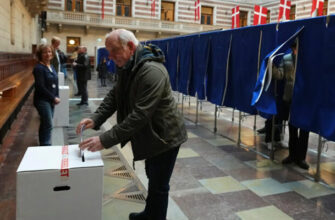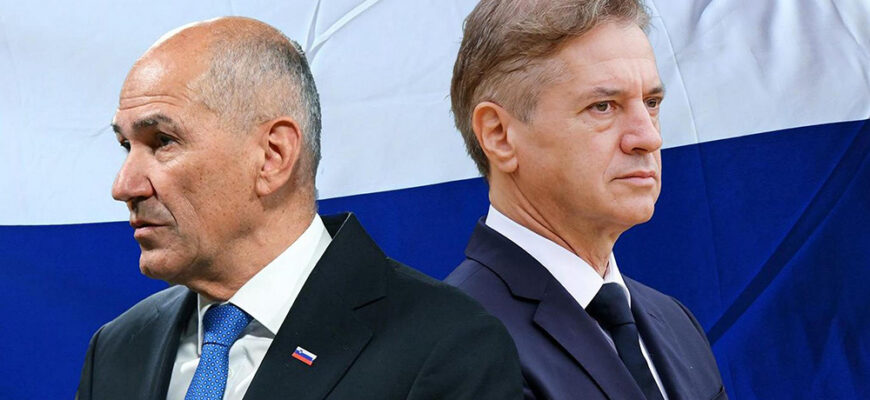
A tense election campaign ended with a narrow victory for the ruling Freedom Movement.
The pro-Brussels left-liberal party of Prime Minister Robert Golob, which had trailed slightly behind the opposition eurosceptics from Janez Janša’s Slovenian Democratic Party (SDS) throughout most of the campaign, managed to recover and finish in first place.
A Minimal Gap Between the Leaders
The gap between the two leaders is minimal. With 99.74% of the vote counted, Golob’s party had received 28.59% of the vote and is claiming 29 out of 90 seats in parliament. Janša’s party, accordingly, received 28.09% and 28 seats.
In addition to the two leading forces, five more parties entered parliament. Even so, many analysts still see the balance tilting toward the eurosceptics.
It is assumed that Janša may be able to form a right-wing coalition based on 43 mandates, while Golob can count on only 40.
Coalition Arithmetic and the Brussels Factor
In theory, the far-right anti-establishment party Resni.ca, which won five seats in parliament, could hold the balance of power in government formation. However, according to analyst Uroš Esih, a coalition with it would bring only problems and instability, making such a government short-lived.
Nor should the Brussels factor be discounted. It will almost certainly play its own game on Golob’s side and, most likely, has its own mechanisms for pressuring smaller parties into cooperating with him.
Judging by the current electoral balance, Slovenia risks entering a period of political turbulence.
What May Have Prevented a Eurosceptic Victory?
What could have derailed the eurosceptics’ triumph, which until recently seemed the most likely scenario?
The first factor is one we know well: pre-election voter bribery, which in Slovenia they did not think to call “electoral corruption.” On the eve of the vote, Golob did not shy away from such populist measures as raising pensions and social benefits.
The scale was such that it allowed Janša to accuse his opponent of conducting financial policy as if “money grew on trees.” But, judging from Moldova’s experience, we know that such tactics often work.
The Trump Factor
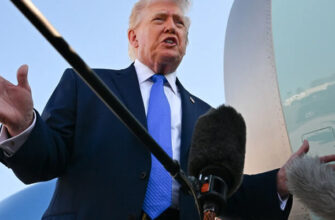
The second factor is Trump. Janez Janša positioned himself as a Trumpist, and that was one of his political advantages. However, the unpopular war against Iran launched by the United States and Israel, which has already had painful consequences for Europe, made him vulnerable and gave the left broad opportunities for criticism.