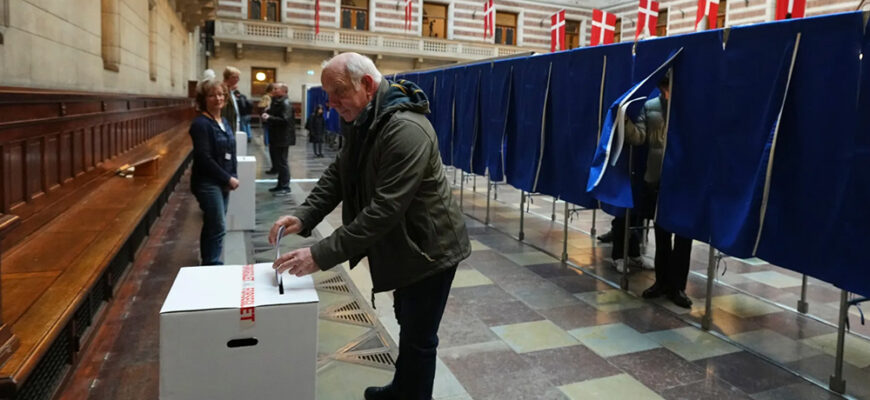
Denmark, where early parliamentary elections were held yesterday, is likely entering a period of political uncertainty.
Historic Setback for the Social Democrats
The main outcome of the elections was a historic defeat for the ruling Social Democratic Party. The party, led by Mette Frederiksen, who previously clashed with Donald Trump over Greenland, remained the most popular force but recorded its worst result in 123 years.
The Social Democrats secured only 21.85% of the vote and won 38 out of 179 seats in the unicameral parliament. This is 12 fewer than in the previous election.
Coalition Partners Also Lose Ground
Frederiksen’s partners in the centre-left coalition also suffered losses. The Liberal Party Venstre won 18 seats, losing 5, while the Moderate Party lost two seats, securing 14 mandates.
Minority Government and Uncertain Future
As a result, Mette Frederiksen, who has already announced her intention to form her third cabinet, finds herself in a minority. Her “red” centre-left bloc holds only 86 seats out of the 90 required for a majority. The rival “blue” bloc secured 78 seats.
Tough Coalition Talks Ahead
However, the situation may shift further to Frederiksen’s disadvantage. Government formation negotiations are expected to be difficult, and she faces a significant risk of losing her post.
The leader of Venstre, Troels Lund Poulsen, who serves as Minister of Defence in Frederiksen’s second government, has expressed ambitions to become prime minister himself. He has already stated that he does not intend to remain in a coalition with the Social Democrats and would prefer either a centre-right coalition or the opposition.
The leader of the Moderates and Minister of Foreign Affairs, Lars Løkke Rasmussen, also remains uncertain. He said he would leave the coalition if the left-wing radicals from the Red-Green Alliance are involved in forming the government, without whom securing a parliamentary majority is mathematically impossible.