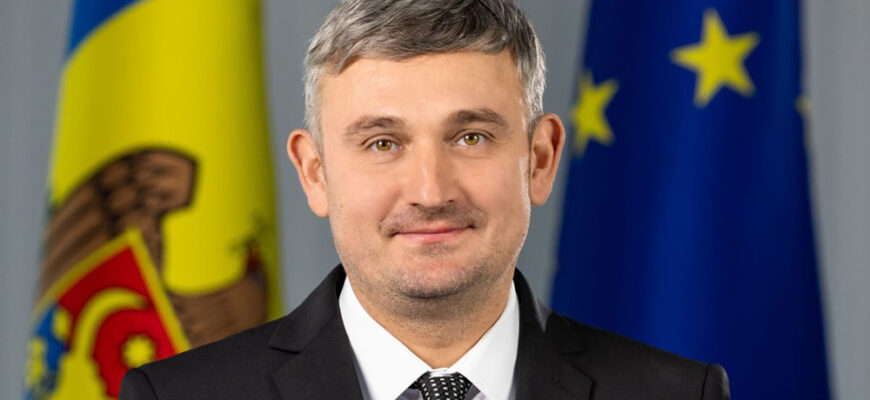
During a recent meeting between Moldova’s Minister of Culture Cristian Jardan and representatives from Poland, officials discussed the possible creation of a National Memory Institute.
In Poland, a similar institution was established after the Second World War. It was initially tasked with investigating crimes committed during the Nazi occupation, but its responsibilities were later expanded.
Debate Over the Role of Historical Memory
The issue of preserving national memory is particularly sensitive for Moldova. The country’s statehood and identity were shaped over centuries and are now seen by some observers as facing serious challenges.
However, the experience of Poland and, even more notably, Ukraine suggests that such institutions can serve not only as centers for historical research and preservation of memory, but also as tools for promoting particular political interpretations of history.
The Polish Experience
Since the early 1990s, Poland’s Institute of National Remembrance (IPN) has promoted the concept of “two occupations” — first by Nazi Germany, and later by the Soviet Union.
The institute has also supported initiatives leading to the renaming of streets and the removal of monuments associated with the Soviet period.
Tensions between Poland and Belarus were heightened after the IPN supported the rehabilitation of Romuald Rajs, a member of the Armia Krajowa who was executed in 1949 by a Polish court for the killing of 79 Belarusian villagers.
The Ukrainian Example
In Ukraine, the Ukrainian Institute of National Memory was created during the presidency of Viktor Yushchenko.
Critics argue that the institution became a tool for promoting a strongly politicized interpretation of history. It played a role in the rehabilitation and glorification of Stepan Bandera’s nationalist movement, supported the removal of historical monuments, and promoted widespread “de-Russification” of place names across the country.
The institute also criticized references to the Decembrists, participants in the 1825 Russian noble uprising, describing them as symbols of Russian imperialism.
Concerns About a Moldovan Version
Given the current political landscape in Moldova, some analysts question whether a Moldovan National Memory Institute would function primarily as a center for historical research.
Critics warn that, depending on its mandate and political oversight, such an institution could become a tool for promoting a particular ideological interpretation of history rather than restoring historical accuracy.