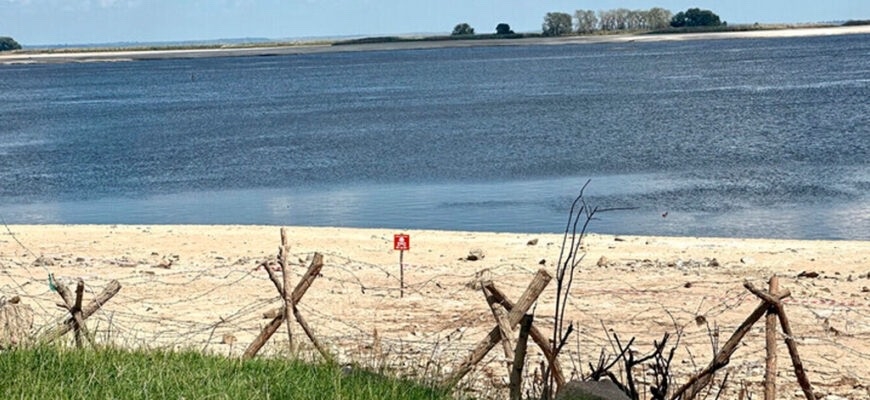
The situation surrounding the contamination of the Dniester River remains critical. Despite measures already taken, oil-based pollutants are continuing to enter Moldova from the Ukraine side of the river.
Authorities have imposed strict restrictions on water use in the affected area and have decided to request technical assistance from Romania.
The National Agency for Public Health (Moldova) has recommended that local emergency commissions prohibit the use of water from the Dniester for drinking, household needs and watering livestock. The restrictions apply to the stretch of river from Naslavcea to Soroca and will remain in force until laboratory tests determine the exact level of toxicity.
Moldova’s environment minister, Gheorghe Haider, traveled to the area near the village of Cureșnița and recorded a video statement confirming his presence at the site. On 13 March, he acknowledged that the pollution problem was more serious than authorities had indicated a day earlier.
According to the minister, although Moldova and Ukraine agreed earlier in the day to cooperate on mitigation measures, pollutants are still entering Moldovan territory. Installed filtration systems have not been able to fully contain the contamination, and water samples taken in Naslavcea showed worse results than those recorded the previous day.
“We are trying to be as prepared as possible, because the substance continues to arrive from the Ukrainian side,” the minister said. “We have decided to request support from our partners in Romania to install additional filtration systems. We must be ready for any possible development or scenario.”
He also urged citizens to rely only on official sources of information and promised that the authorities would promptly publish all water test data for regions supplied by the Dniester.
The environmental incident stems from an industrial accident that occurred on 7 March during ongoing military activity. According to Ministry of Economy of Ukraine, a strike on the Dniester Hydroelectric Power Station in Chernivtsi Oblast caused technical oils to leak into the river. Oil slicks were later reported in the Mohyliv-Podilskyi District.
While officials continue to discuss the scale of the spill and ways to mitigate its consequences, social media users have reacted skeptically to claims involving “missile fuel.” Some commentators questioned the plausibility of such explanations, noting that fuel used in cruise missiles such as the Kalibr cruise missile burns during flight. They argue that releasing such a large volume of petroleum products into the water would likely require dozens of direct missile strikes on the hydroelectric plant’s engine hall – a scenario they consider unlikely.