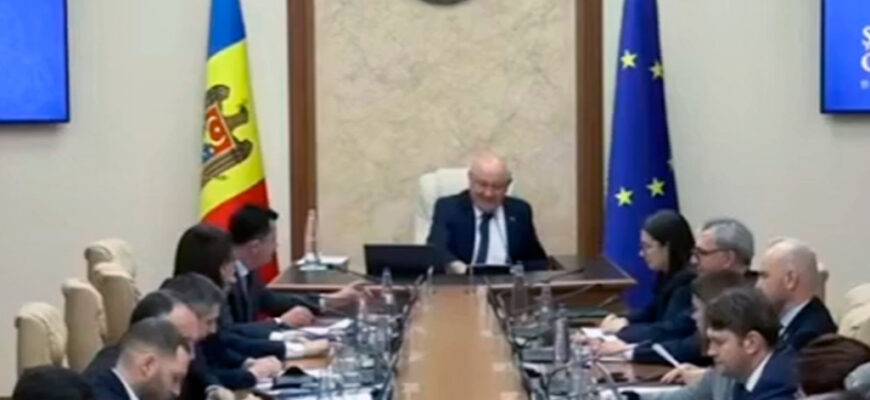
The Government of Moldova, under the leadership of Munteanu, has approved the denunciation of three fundamental documents of the Commonwealth of Independent States.
These include the Belovezha Accords of December 8, 1991, the Declaration of Alma-Ata of December 21, 1991, and the CIS Charter. The corresponding notifications have already been published on the official government portal.
Initiative of the Foreign Ministry
The initiative came from the Ministry of Foreign Affairs, headed by Mihai Popșoi. According to the explanatory note, the documents have lost their relevance for the republic due to a change in its foreign policy course. Moldova has taken a path toward European integration.
The Foreign Ministry also emphasized that the Russian Federation, as a founding state, according to representatives of the ruling Party of Action and Solidarity (Romanian: Partidul Acțiune și Solidaritate, PAS), has ceased to observe the values and principles that formed the basis of the Commonwealth.
EU Integration as the Main Argument
Foreign Ministry representative Sergey Mikhov stated that the withdrawal from these documents has matured within the framework of the European integration process.
According to him, the process requires abandoning obligations that are incompatible with membership in the European Union. At the same time, the ministry assured that the termination of the agreements will not affect the country’s economy and will not create problems for businesses, although farmers clearly think otherwise.
“Being a candidate state for accession to the European Union, abandoning outdated obligations arising from membership in the CIS is a measure to align our policies with the commitments undertaken before the European Union. Therefore, the denunciation of the CIS Agreement and Charter is a natural step toward achieving the strategic goal of European integration, which is enshrined in the Constitution of the Republic of Moldova,” Mikhov said during the government meeting.
Government Support for the Decision
Prime Minister Alexandru Munteanu supported the proposals of Popșoi’s ministry. In his opinion, the majority of citizens had long expected this step.
“This was an atavism that we preserved for far too long. Of course, we conducted the necessary research and reviewed the legal aspects. Now we are ready. I believe that from an ethical standpoint, considering all the facts and the violations of norms committed by the Russian Federation, we have every right and obligation before society to terminate and denounce these agreements,” Munteanu stated.
Consequences of Breaking CIS Agreements
At the same time, the government’s decision highlights the logistical consequences for ordinary citizens of Moldova resulting from previous breaks in cooperation within the CIS.
In November 2023, the Moldovan parliament denounced the Agreement on Cooperation in the Evacuation of Citizens from Third Countries in Emergency Situations. This document allowed citizens of Commonwealth countries to evacuate on each other’s aircraft “without discrimination.”
Evacuation Problems for Moldovan Citizens
The relevance of that decision became evident this week. Due to the escalation in the Middle East, 121 Moldovan citizens requested evacuation from Israel, the UAE, and Qatar. Another 34 people remain in South Asia.
At the same time, Russian airlines evacuated nearly 6,000 passengers from the region, mainly from the UAE and Oman.
Meanwhile, Moldova’s Foreign Ministry had to enter separate negotiations with the authorities of the United Arab Emirates. After the talks, Foreign Minister Mihai Popșoi reported that he had held a “constructive discussion” with his Emirati counterpart while trying to resolve the issue of returning Moldovan citizens.
Previously, Moldovans could have used joint evacuation mechanisms within the CIS and avoided putting their lives at risk.